
Taiwan Leader Urges China to Prioritize Economy Over Military Ambitions
In a pointed address, Taiwan's president framed Beijing's military pressure as detrimental to regional stability and economic development, signaling a widening diplomatic divide.
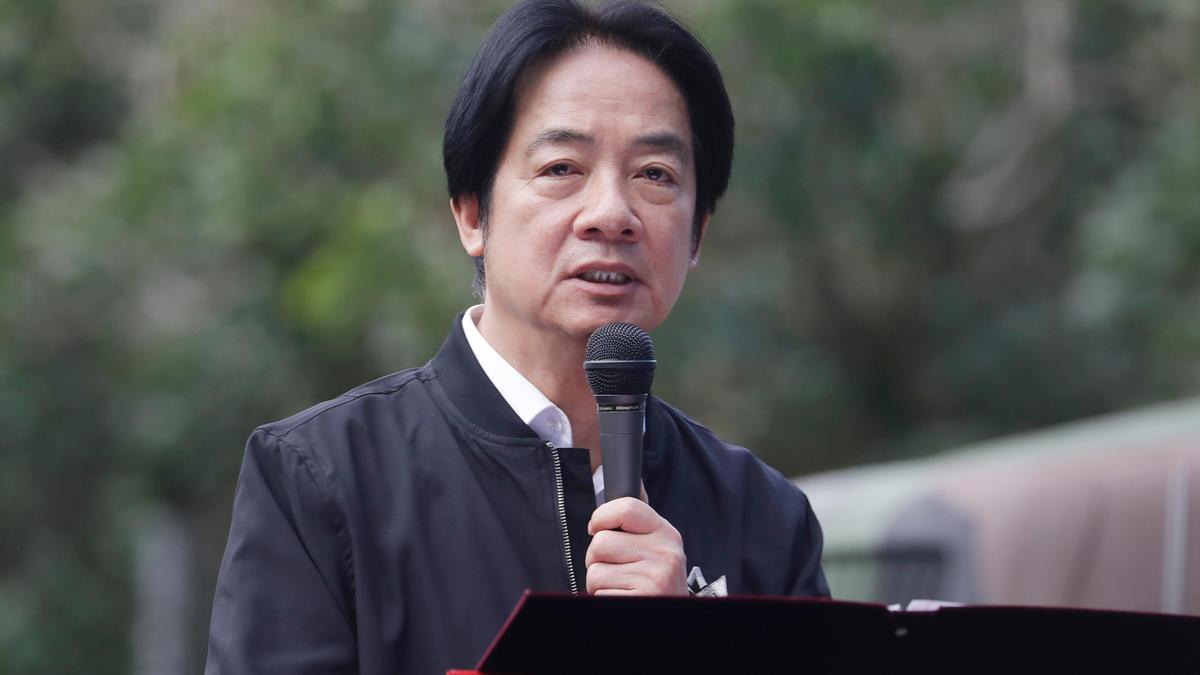
Taiwan — Taiwan's president directly challenged China's leadership on Wednesday, asserting that Beijing should focus on its domestic economic challenges rather than pursuing "territorial expansion," a clear reference to China's longstanding claim over the self-governed island. The remarks, delivered during a national security address, come amid heightened regional tensions and represent a pointed critique of Beijing's military and diplomatic posture toward Taiwan.
The president's comments underscore the deepening rift between Taipei and Beijing, which views Taiwan as a breakaway province to be reunited with the mainland, by force if necessary. This rhetorical escalation occurs as major global powers, including the United States, reaffirm their strategic interests in the Taiwan Strait.
A Call for Economic Focus Over Military Posturing
In the speech, Taiwan's leader contended that China's substantial military expenditures and frequent exercises near the island are destabilizing and counterproductive. The president argued that these resources would be better spent addressing domestic economic headwinds and social welfare needs within China itself.
"True strength and security for the people of this region come from shared prosperity and stability, not from displays of force or expansionist rhetoric," the president stated. The address positioned Taiwan as a responsible democratic stakeholder committed to peace, in contrast to what was characterized as Beijing's confrontational approach. This framing seeks to garner international sympathy and support by highlighting the potential risks of conflict to global trade and security.
The Backdrop of International Tensions
The Taiwanese leader's statement did not occur in a vacuum. It responds to a consistent pattern of military and political pressure from Beijing. Furthermore, it engages with an active international dialogue concerning Taiwan's status. Notably, recent U.S. legislation has mandated a review of official contact guidelines with Taiwan, a move that consistently draws sharp condemnation from Beijing.
Simultaneously, Japan has been drawn into related diplomatic friction. China recently unleashed a wave of criticism against Japanese leader Sanae Takaichi after she suggested in parliament that a military attack on Taiwan could trigger a response involving Japan's Self-Defense Forces. While a former Japanese prime minister played down the diplomatic row, the exchange illustrates how Taiwan remains a potential flashpoint involving major powers in the region.
The Core of the Dispute: Sovereignty and Status
At the heart of the tension is the fundamentally incompatible positions on sovereignty. The Chinese government's One-China Principle is non-negotiable in Beijing, leaving no room for any official recognition of Taiwan's independent governance. Taiwan's current administration, however, operates on the premise of its separate sovereignty and has repeatedly rejected Beijing's claims.
The Taiwanese president's latest rhetoric is likely to be met with familiar condemnation from Chinese officials, who typically label such statements as "dangerous provocations" and "separatist lies." The cycle of statement and counter-statement has persisted for decades, though the frequency and intensity have increased in recent years alongside China's military modernization.
A Strait of Uncertainty
Analysts suggest the Taiwanese leader's emphasis on economics is a strategic appeal to both the international community and the people of Taiwan, framing the island as a rational actor amid uncertainty. The subtext is a warning that Beijing's actions risk provoking a crisis that could disrupt the global economy, a message aimed at audiences in Washington, Tokyo, and European capitals.
The immediate future will likely see China reiterate its opposition to what it terms foreign interference, coupled with continued military flights and naval patrols near the median line of the Taiwan Strait. The stability of one of the world's most critical geopolitical regions continues to hinge on the precarious balance of deterrence, diplomacy, and the economic interdependence that ties Beijing, Taipei, and their global partners together.


