
Australian Senator Barred After Wearing Burqa in Parliament During Controversial Protest Stunt
Pauline Hanson’s burqa protest sparks heated debate over religious attire, security concerns, and growing tensions surrounding multiculturalism in Australia.


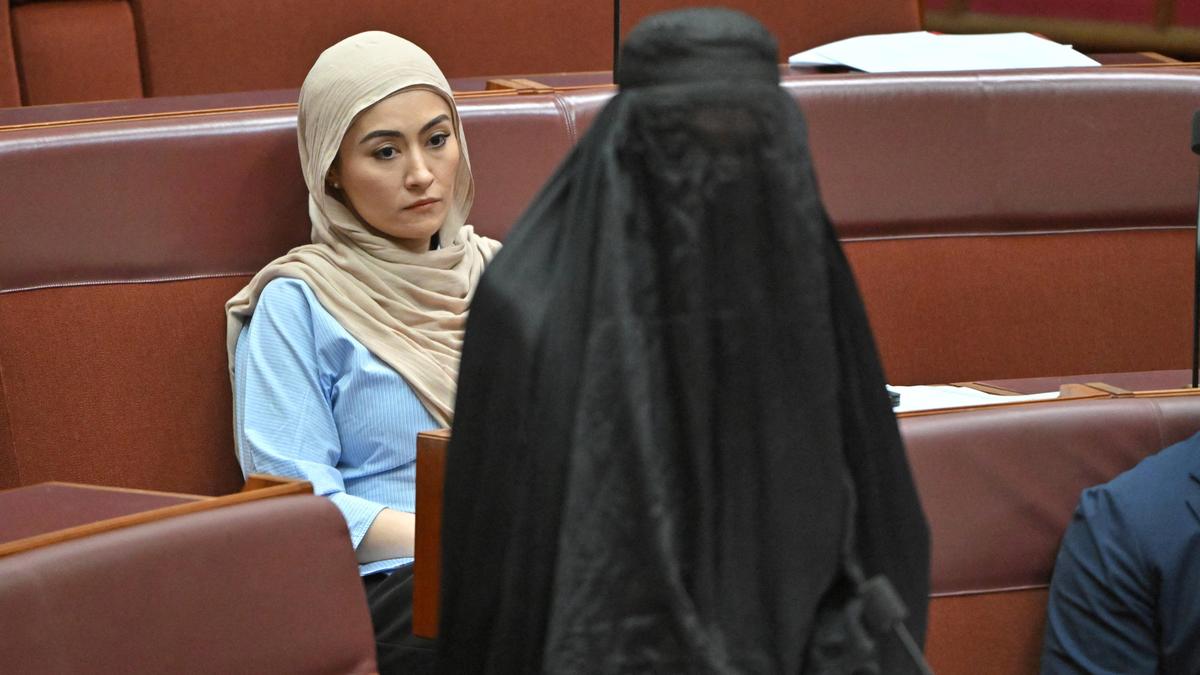
CANBERRA — Australian Senator Pauline Hanson is barred from entering the Senate chamber after wearing a full black burqa during a parliamentary session Thursday in what she calls a “political protest,” drawing immediate condemnation from lawmakers, Muslim community leaders, and civil rights groups. Hanson says her actions aim to highlight national security concerns, while critics argue the display is offensive, dangerous and designed to provoke fear.
The incident unfolds shortly after Hanson enters the chamber fully veiled, prompting presiding officers to intervene and direct her to remove the garment and leave the floor. Senate leaders later confirm that they barred her from proceedings for violating dress protocols and causing disruption.
A Protest Sparks National Outcry
Hanson, leader of the One Nation party and known for her hardline views on immigration and Islam, says she wore the burqa to push for a national ban on face-covering religious garments. She argues that full-face veils hinder law enforcement efforts and pose potential security risks.
“I did this to make a point about public safety,” Hanson tells reporters outside Parliament House. “Australians deserve to feel secure, and full-face coverings prevent identification.”
However, senators from across the political spectrum criticize the move as a political stunt that disrespects Muslim women and fuels division. Attorney-General Mark Dreyfus says Hanson’s protest shows “a dangerous misunderstanding of Australia’s values,” while Labor and Greens senators call for renewed discussions on Islamophobia in public life.
Security Concerns Used as Justification
In remarks following the incident, Hanson insists that her protest reflects growing public frustration about security challenges. She references recent counterterrorism operations and claims that law enforcement officials have privately raised concerns about face-covering garments.
Australian Federal Police officials decline to comment on the specifics of her claim but note that security procedures already allow officers to request identification in high-risk situations. They emphasize that full-face coverings do not prevent legally mandated verification when necessary.
Security analysts say Hanson's protest oversimplifies complex issues. “There is no evidence that burqas pose unique or elevated risks compared to other forms of clothing,” says Dr. Reza Faridi, a counterterrorism researcher at Griffith University. “This act blurs the lines between legitimate security policy and cultural provocation.”
Reaction Across Parliament
Multiple senators stand to denounce Hanson’s actions shortly after she removes the burqa and returns to her seat. Some say the protest undermines the dignity of Parliament, while others accuse Hanson of exploiting minority communities for political gain.
Senate President Sue Lines says the chamber maintains strict rules to protect decorum and safety. “The Senate is not a stage for costume demonstrations,” she says. “Any attire designed to mislead or cause disruption violates our standing orders.”
Liberal Party senators distance themselves from Hanson’s actions despite having previously debated policies targeting face-covering veils. Coalition members stress that while national security remains a priority, protests intended to inflame cultural tensions are not constructive.
Muslim Community Leaders Condemn the Display
Islamic organizations across Australia respond swiftly, calling Hanson’s actions disrespectful and irresponsible. The Australian Federation of Islamic Councils says the protest “openly mocks an article of faith practiced by Muslim women” and contributes to rising community anxiety.
“Parliament should be a space for serious policy debate, not theatrics designed to humiliate minorities,” says council spokesperson Rimah Ahmed. “Actions like this increase the risk of harassment for visibly Muslim women.”
Data from the Islamophobia Register Australia shows a 40 percent rise in reported incidents targeting Muslim women in public spaces over the past two years, most of which involve victims wearing a hijab, niqab or burqa. Community advocates say public behavior by political leaders often influences the tone of public interactions.
A History of Controversy
Hanson has long centered her political platform on issues relating to immigration, national identity and skepticism toward multiculturalism. Since founding One Nation in 1997, she has frequently criticized Muslim immigration and proposed policies limiting the wearing of face-covering garments in public places.
In 2017, Hanson staged a similar stunt by entering the Senate chamber in a burqa before removing it during a speech calling for a national ban. The act was condemned at the time by both major political parties, with then–Attorney-General George Brandis telling Hanson, “You have offended millions of Australians.”
Political analysts say the latest protest follows a familiar pattern. “Hanson relies heavily on high-visibility actions that generate media coverage and stir debate among her supporters,” says Dr. Elena Varga, a political scientist at the University of Sydney. “These gestures tend to overshadow substantive policy discussions.”
The Legal and Cultural Debate Over Religious Dress
Australia does not have national laws restricting religious attire, though some states have enacted targeted rules in specific contexts such as courtrooms or identification checks. Government officials repeatedly state that any policy regulating religious garments must be balanced with human rights protections.
Advocates for religious freedom argue that wearing the burqa or niqab is a personal expression of faith and autonomy. They warn that sweeping bans could conflict with constitutional protections for free exercise of religion.
Opponents of face-covering garments say they hinder social cohesion and pose practical challenges in areas requiring visual identification. However, experts emphasize that existing processes already address most identification concerns without requiring broad prohibitions.
Broader Implications for Australian Politics
The incident comes at a time when debates over immigration, cultural identity and social inclusion continue to shape Australia’s political landscape. Recent polls show growing public attention to issues involving minority communities and national security, though most Australians support multiculturalism.
Government officials say Thursday’s disruption underscores the need for respectful debate. “We can’t let political stunts distract from the real issues facing the nation,” says Independent Senator Lidia Thorpe. “What we need is dialogue, not division.”
Human rights groups call for stronger anti-discrimination initiatives and renewed investment in community outreach programs to counter rising hostility toward Muslim communities.
Parliamentary officials say Hanson’s temporary barring applies only to the session during which the incident occurred, though future disciplinary actions remain possible if similar disruptions occur. Hanson says she intends to continue advocating for what she calls “security-first policies,” including renewed debate on a national ban on face-covering garments.
Analysts say the controversy is likely to resurface during upcoming legislative sessions, particularly as parties debate immigration and counterterrorism strategy.
For now, community leaders and lawmakers urge caution in how political disagreements unfold. “Political theater has real-world consequences,” says Ahmed. “It affects how people treat each other on the streets. We need leadership that lowers the temperature, not raises it.”


