
Ancient Ethiopian Volcano Awakens After 12,000 Years, Disrupting Global Aviation
Hayli Gubbi erupts unexpectedly in the Afar region, sending ash plumes 14 kilometers high across the Red Sea and Arabian Peninsula to India, grounding dozens of international flights.

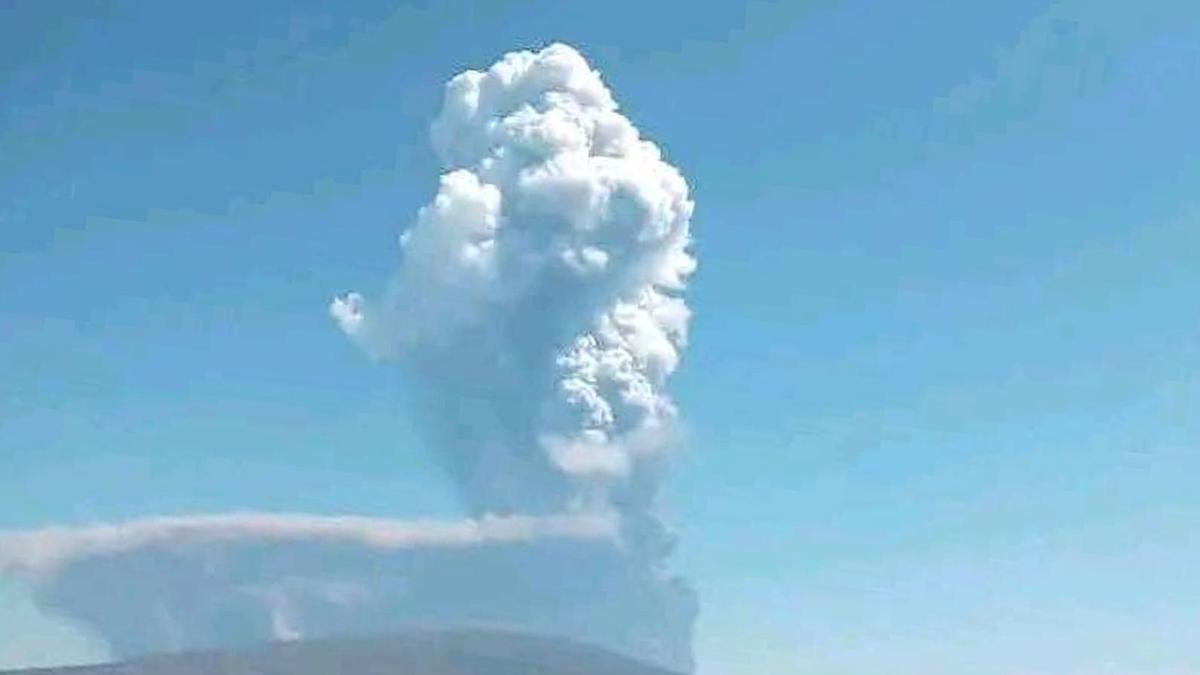
A volcano in northern Ethiopia's Afar region erupted Sunday morning for the first time in at least 12,000 years, sending massive ash plumes across the Red Sea and disrupting air travel from the Middle East to South Asia. The Hayli Gubbi volcano, located about 800 kilometers northeast of Addis Ababa, erupted for several hours, leaving the nearby village of Afdera covered in ash. No casualties have been reported, though local officials express concern about the economic impact on livestock-dependent communities.
Residents described the eruption as feeling like a sudden bomb had been thrown. Ahmed Abdela, an Afar region resident, said tourists and guides heading to the nearby Danakil Desert were stranded in ash-covered Afdera by Monday. The unexpected awakening of this long-dormant volcano has captured global attention and raised questions about volcanic monitoring in one of Earth's most geologically active regions.
Massive Ash Cloud Disrupts International Aviation
The eruption sent thick plumes of smoke up to 14 kilometers into the sky, with ash clouds drifting to Yemen, Oman, India, and northern Pakistan, according to the Toulouse Volcanic Ash Advisory Centre in France. The Volcanic Ash Advisory Center in Toulouse released an advisory to planes flying in the region, indicating that ash had reached altitudes of 49,000 feet.
At least seven international flights were cancelled and more than 10 delayed at Delhi airport on Tuesday due to ash plumes from the volcano. Air India cancelled 13 flights since Monday, while Akasa Air suspended services to Jeddah, Kuwait, and Abu Dhabi. Indian carriers including IndiGo and international operators like KLM made precautionary cancellations as volcanic ash posed risks to aircraft engines.
The India Meteorological Department reported that ash from the volcano is mostly at flight altitudes—35,000 to 40,000 feet for international flights and 25,000 to 33,000 feet for domestic services. The ash plume entered Gujarat on Monday and spread across Rajasthan, Maharashtra, Delhi, Haryana, and Punjab before moving toward China by Tuesday evening.
UAE flag carriers Emirates, flydubai, and Etihad Airways confirmed their flights continued operating as scheduled, though they closely monitored the situation. Saudi Arabia's National Center for Meteorology confirmed the eruption posed no threat to the kingdom's atmosphere, while Oman's Environment Authority warned of potential air quality impacts.
Local Communities Face Economic Challenges
Local administrator Mohammed Seid told reporters there were no casualties, but the eruption could have economic implications for the community of livestock herders, as much of the forage for animals is now covered with thick dust. Many villages have been covered in ash, and as a result, their animals have little to eat.
In the immediate aftermath of the eruption, dark smoke rather than white ash enveloped the area, plunging it into near-darkness, residents said. Concerns persist about how the eruption has affected air quality in nearby villages, though international meteorological agencies indicated the high-altitude ash would not significantly worsen ground-level pollution.
Afar TV reported that vibrations and moderate tremors were felt in Ethiopia's Wollo area, in the northern Tigray region, and as far away as neighboring Djibouti. The widespread impact demonstrates the volcanic system's power after millennia of dormancy.
Geological Context and Volcanic History
The volcano, which rises about 500 meters in altitude, sits within the Rift Valley, a zone of intense geological activity where two tectonic plates meet. Hayli Gubbi is the southernmost volcano of the Erta Ale Range, a chain of low-lying shield volcanoes in the Afar region. The volcano features a symmetrical scoria cone with a 650-foot-wide crater.
The Smithsonian Institution's Global Volcanism Program said Hayli Gubbi has had no known eruptions during the Holocene, which began approximately 12,000 years ago at the end of the last Ice Age. Simon Carn, a volcanologist and professor at Michigan Technological University, confirmed on Bluesky that Hayli Gubbi has no record of Holocene eruptions.
The volcano is a product of the East African Rift, an approximately 4,000-mile-long system that initially formed during the Miocene epoch, approximately 25 million years ago. The rift likely formed as heat flow caused Earth's crust to stretch and fracture, creating alternating raised and lowered blocks of crust.
Scientific Significance and Future Implications
Deep underground, molten rock, gases, and crystals gradually accumulated in the magma chamber over millennia. Scientists believe a key trigger for the eruption was the intrusion of fresh, hotter magma from deeper inside Earth, which reheated and pressurized the magma chamber. This increased internal pressure, along with expanding gas bubbles as magma ascended, led to the violent explosive eruption.
Residents told reporters they had noticed faint smoke from the volcano about three days before, but there were no reported scientific forecasts for the eruption. The lack of advance warning highlights challenges in monitoring volcanoes with extremely long dormancy periods, particularly in remote regions with limited scientific infrastructure.
Ethiopia is thought to contain around 50 volcanoes that have been active during the Holocene. Only the United States, Japan, Russia, Indonesia, and Chile have more Holocene volcanoes according to the Smithsonian Institution National Museum of Natural History Global Volcanism Program. According to the British Geological Survey, over 46 percent of Ethiopia's population lives within 100 kilometers of a Holocene volcano and are exposed to volcanic hazards.
Regional Volcanic Activity and Tectonic Dynamics
Erta Ale volcano, one of Ethiopia's most active, is located within the same range, which is set in the Rift Valley. Erta Ale, whose name means "smoking mountain" in Afar, last overflowed with lava in January 2023. The contrast between Erta Ale's continuous activity and Hayli Gubbi's 12,000-year silence illustrates the complexity of volcanic systems in this tectonically active zone.
From late 2024 through early 2025, several earthquake swarms—a series of small earthquakes in a local area—hit near the Fentale and Dofan volcanoes in Ethiopia's Awash National Park. The seismic activity suggests ongoing tectonic movements beneath the region that could affect multiple volcanic systems.
Hayli Gubbi is situated where multiple tectonic plates—African, Somali, and Arabian—are pulling apart at a rate of about 0.4 centimeters per year. This continental rifting creates the conditions for magma generation and volcanic activity, making the region one of the most geologically dynamic on Earth.
Aviation Safety and Ash Monitoring
Volcanic ash clouds contain abrasive particles which can enter and damage aircraft engines, contaminate airfields, and reduce visibility, making flying hazardous. The aviation industry treats volcanic ash as a severe threat, leading to conservative flight cancellations and rerouting when ash is detected in flight corridors.
Monitoring agencies tracked the ash cloud's movement across thousands of kilometers using satellite imagery and ground-based observations. The Toulouse Volcanic Ash Advisory Center initially handled monitoring before transferring responsibility to the Tokyo Volcanic Ash Advisory Center as the plume drifted eastward.
The India Meteorological Department and independent weather services like IndiaMetSky Weather reassured the public that ash was concentrated in the upper atmosphere and would not worsen pollution in cities like Delhi. However, authorities monitored sulfur dioxide levels closely, as concentrations could rise in the Himalayas and adjoining regions.
Historical Context and Global Comparisons
The global disruption caused by Hayli Gubbi's awakening echoes past events, most notably the 2010 Eyjafjallajökull eruption in Iceland. That eruption grounded approximately 100,000 flights over eight days, affecting millions of passengers and causing billions in economic losses. While Hayli Gubbi's impact has been less severe, it demonstrates how volcanic eruptions can disrupt interconnected global systems.
The eruption provides scientists with a rare opportunity to study a volcanic system awakening after an extraordinarily long dormancy period. Understanding the processes beneath Hayli Gubbi helps researchers assess volcanic risks globally, especially for other long-dormant volcanoes, by revealing that deep-earth changes often precede sudden reawakening events.


