
Kohli Emphasizes Mental Approach Over Match Practice Amid BCCI Domestic Cricket Request
Following a match-winning century, the star batter outlines his preparation philosophy as reports indicate board pressure to play the Vijay Hazare Trophy.
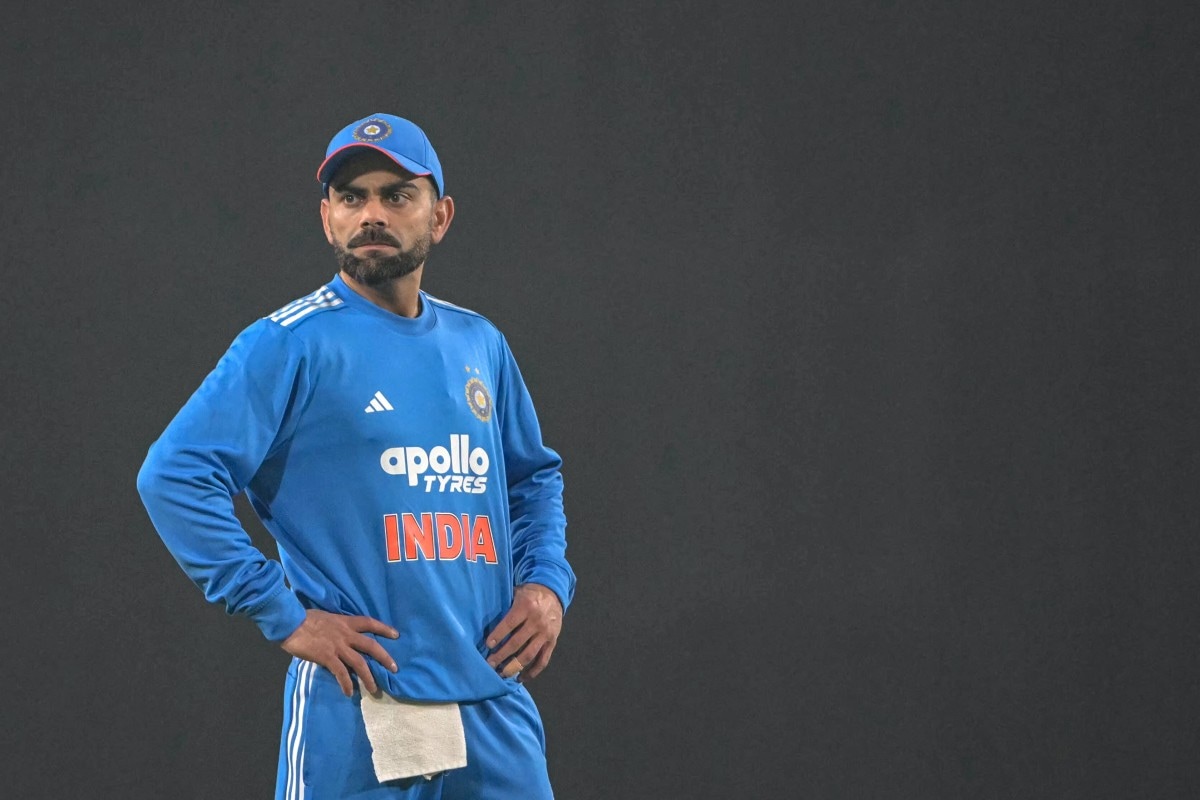
RANCHI, India — Indian cricket star Virat Kohli has publicly articulated his unique philosophy on match preparation, emphasizing mental readiness over extensive game time . His remarks come amid multiple reports that the Board of Control for Cricket in India is urging him and fellow veteran Rohit Sharma to participate in the upcoming Vijay Hazare Trophy domestic one-day tournament to secure their places for the 2027 ODI World Cup . Kohli made his comments after scoring a match-winning 135 runs against South Africa in the first ODI here Sunday, a performance that earned him Player of the Match honors .
The century, his record-extending 52nd in ODI cricket, showcased Kohli in prime form despite a lack of recent international matches . However, with both Kohli, 37, and Rohit Sharma, 38, having retired from T20I and Test cricket, their path to the 2027 World Cup is complicated by a sparse ODI schedule . The BCCI, concerned about maintaining their fitness and form with limited international fixtures, views domestic cricket as a necessary solution . This has set the stage for a nuanced dialogue between the iconic players and the cricket board over the best path forward.
The BCCI's Stance and the Domestic Cricket Ultimatum
According to reports, the BCCI's selection committee, led by Ajit Agarkar, is taking a firm stance . The committee is reportedly "waiting for a slip-up by Rohit or Kohli," in terms of fitness or form, to justify moving on from them in ODI plans . To mitigate the risk of rustiness, the selectors and team management want the duo to play in the Vijay Hazare Trophy, which begins Dec. 24 .
Chief selector Ajit Agarkar has communicated that he "will be tough if they don’t play in the domestic circuit" once the ongoing South Africa ODI series concludes . Reports suggest that while Rohit Sharma has indicated a willingness to play for Mumbai, Kohli's plans have been less clear . Some reports state Kohli has agreed in principle to play for Delhi in Bengaluru after a trip to London, though the Delhi & District Cricket Association has not received official communication . The BCCI is planning a crucial meeting after the South Africa series to formalize plans for the veterans' ODI future .
Kohli's Counter-Perspective: "All My Cricket Has Been Mental"
In what appears to be a direct, though subtle, response to the prevailing narrative, Kohli used the post-match presentation platform to explain his personal approach . “I’ve never been a believer in a lot of preparation, if that makes sense. All my cricket has been mental,” Kohli told broadcasters . He argued that after over 300 ODIs and 15-16 years of international cricket, his body and mind provide clear signals .
His method hinges on mental visualization and sustained physical fitness as a lifestyle, rather than a cricket-specific regimen. “I work physically very hard every day of my life. It’s got nothing to do with cricket anymore. It’s the way I live,” Kohli said . He explained that rigorous net sessions—batting for 90 minutes to two hours without a break—serve as his primary fitness and form marker . He conceded that seeking more game time is a reactive measure, stating, “I understand if there’s a dip in form, you look for games and try to get that form back” .
The Core Conflict: Protocol vs. Proven Class
The situation presents a classic conflict in professional sports: the enforcement of a standardized protocol versus accommodation for proven, elite performers with unique methods. The BCCI's perspective is rooted in logistical and planning concerns . With very few ODIs scheduled before the 2027 World Cup, officials worry that long gaps without competitive cricket could lead to the kind of rustiness observed in the early matches of the recent Australia series, where both stars struggled before scoring in the final game .
From Kohli's viewpoint, his performance in Ranchi—and his 83 in the third ODI in Sydney—is evidence that his methods work . He believes his intense focus on mental conditioning and supreme physical fitness, maintained privately, is sufficient to keep him at the highest level . His stance pushes back against the notion that domestic cricket is an indispensable requirement for someone of his experience and caliber .
Broader Context: Transition, Scrutiny and the 2027 World Cup
This debate occurs against a backdrop of significant transition in Indian cricket. The recent Test series loss to South Africa at home has intensified scrutiny on selection policies and the post-Kohli/Rohit era in the longest format . In the ODI arena, the team management is actively identifying backup players for the 2027 World Cup, acknowledging the possibility that the veterans may not make it .
The age factor is inescapable. Kohli will be 39 and Rohit 40 during the 2027 World Cup in South Africa, Zimbabwe and Namibia . The BCCI's insistence on domestic play can be seen as a risk-management strategy, ensuring the legends remain battle-ready while also creating a transparent criterion for continued selection . It also sets a precedent for other senior players who may transition to single-format careers.
Potential Resolutions and the Path Forward
Despite the philosophical divergence, a practical compromise appears likely. Reports indicate Kohli has tentatively agreed to feature in some Vijay Hazare Trophy matches for Delhi . His schedule, which includes a return to London after the South Africa series, may see him join the Delhi squad in Bengaluru for select games before the New Zealand series in January .
The upcoming meeting between the BCCI, selectors, and team management will be pivotal in providing clarity . A source emphasized, “It is very important that players of Rohit and Kohli’s stature are given clarity about what is expected of them” . The board is also keen for Rohit to maintain his aggressive batting approach, which was seen to waiver in Australia .
A Dialogue Shaped by Legacy and Future Goals
Virat Kohli's "big remark" is more than a comment on preparation; it is an assertion of his professional self-knowledge at the twilight of a legendary career. It underscores a belief that his value and readiness should be judged by output in international fixtures, not adherence to a conventional pathway.
For the BCCI, the principle of accountability and systematic preparation for a major tournament is at stake. The resolution will likely involve Kohli participating in limited domestic cricket, not necessarily because he has changed his view, but as a pragmatic acknowledgment of the board's requirements for long-term planning.
Ultimately, both parties share the same goal: a fit, in-form Virat Kohli leading India's charge at the 2027 World Cup. The current discourse is a negotiation on the best route to that destination, pitting institutional protocol against the proven, individualized process of one of the game's greats. How this is navigated will set a significant precedent for managing aging superstars in the modern cricketing landscape.


