
India Rout Chile as Argentina Dominate Japan in Confident Junior World Cup Starts
Clinical performances from India and Argentina set early tournament tone in men’s junior hockey competition
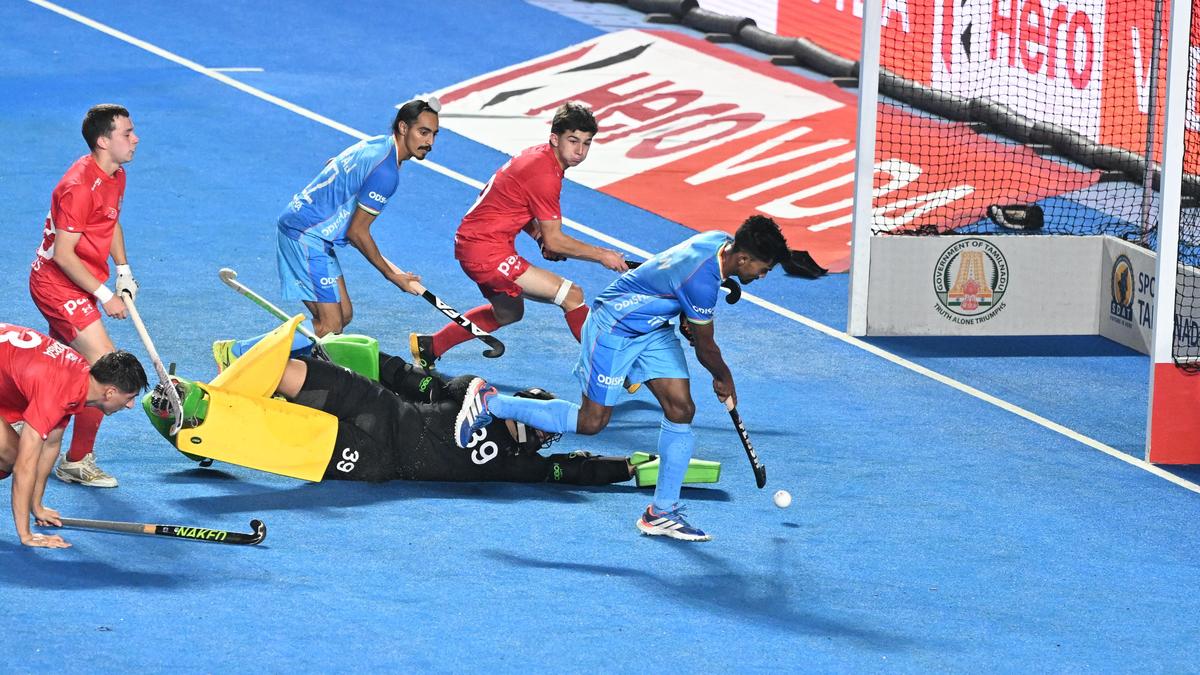
India opened its Junior Hockey World Cup campaign with a commanding win over Chile on Wednesday in Kuala Lumpur, Malaysia, showcasing sharp attacking structure and disciplined defense in a one-sided Pool C contest. Argentina followed with an equally assertive performance, outclassing Japan in their opener to underline the South American team’s title ambitions. The decisive victories signaled early momentum for two of the tournament’s strongest sides as group-stage action intensified.
India’s Dominance Sets the Pace
India entered the match as heavy favorites and delivered from the start, controlling possession, stretching the field with quick passing sequences and applying early pressure. The first breakthrough came within minutes as India’s forwards capitalized on a defensive lapse from Chile, converting a clean-field chance to seize control.
Coach CR Kumar praised the players’ composure and structure after the match, noting that the team “executed the basics well and stayed disciplined throughout,” allowing the side to rotate freely and maintain tempo.
India continued to press aggressively, forcing Chile into turnovers and earning a series of penalty corners. By the end of the first half, the scoreline reflected India’s dominance, with multiple field goals and a penalty-corner conversion putting the match beyond Chile’s reach.
⸻
Clinical Attack, Organized Defense
India’s attacking unit displayed speed and cohesion, frequently cutting through Chile’s midfield lines. Forwards linked well with the half line, while the midfield moved the ball efficiently, giving India sustained circle penetrations.
Chile struggled to respond, managing only occasional counterattacks that were quickly broken up by India’s defenders. Goalkeeper rotations ensured the Indian backline remained steady, with defenders stepping up to intercept long balls and disrupt transitions.
Statistically, India recorded more than triple the circle entries of Chile, and the possession imbalance reflected a match where India dictated rhythm throughout.
⸻
Second-Half Continuity Ensures Comprehensive Win
Even with a strong lead, India did not ease off in the second half. Rotational changes allowed younger squad members to gain crucial World Cup experience while maintaining tactical sharpness. The team added additional goals in the final quarters, further widening the margin and building goal-difference momentum—an important factor in tightly contested pool stages.
Chile attempted to reorganize defensively, pulling players behind the ball and focusing on limiting damage. While the approach helped stem India’s scoring rate temporarily, they struggled to build meaningful offensive plays.
The final whistle confirmed India’s comfortable win, earning them full points and establishing a psychological edge heading into future group matches.
⸻
Argentina Outclass Japan in Solid Display
Earlier in the day, Argentina delivered one of the most polished performances of the opening round with a convincing victory against Japan in Pool B. The South American team relied on precise passing, high press and swift counterattacks to control the match from early on.
Japan entered the contest aiming to disrupt Argentina with structured play and quick ball movement, but Argentina’s midfield unit proved too strong, consistently breaking down possession and creating scoring opportunities.
Argentina’s early goals set the tone, with forwards exploiting space behind Japan’s defense and finding success through both field goals and penalty-corner variations.
⸻
Japan Struggle to Find Rhythm
Despite intermittent moments of structured buildup, Japan found it difficult to match Argentina’s pace and physicality. Their attempts at pressing were bypassed by Argentina’s quick two-touch play, and turnovers in midfield left Japan scrambling defensively.
Argentina’s penalty-corner unit, typically a core strength for the team, delivered again. A well-executed drag flick in the second quarter extended the lead, forcing Japan to shift strategy and push numbers forward.
Japan created a handful of circle entries later in the match but failed to convert, with Argentina’s defense remaining organized and disciplined.
⸻
Tournament Context: India and Argentina Among Early Favorites
Both India and Argentina are widely considered among the stronger teams in the tournament, each entering the World Cup with recent success at the junior continental level.
India, the 2016 champions and 2021 bronze medallists, bring a blend of youth league experience and structured coaching foundations. Their opening victory reinforces expectations of a deep run, though tougher group matches lie ahead.
Argentina also entered with strong momentum from the Pan American circuit, where their junior program continues to produce dynamic attacking players. Their win against Japan strengthened their position in a challenging pool featuring European competition.
⸻
Reactions From Coaches and Analysts
India’s coach Kumar said he was satisfied but emphasized areas for refinement, noting that the team “must stay focused on defensive transitions as competition intensifies.” He credited the squad’s fitness for sustaining consistent pressure throughout the match.
Argentina coach Lucas Rey, pleased with the team’s control, highlighted the importance of maintaining tactical discipline. “Japan are structured and fast, so keeping our lines compact was crucial,” he said after the match.
Analysts pointed out that both India and Argentina benefitted from early momentum, but tougher tests would give a clearer indication of championship viability.
⸻
What Comes Next
India face a stronger test in their next group game, which will likely determine early standings at the top of Pool C. Maintaining consistency and minimizing lapses will be central to their progression strategy.
Argentina also prepare for a difficult upcoming fixture, likely against a European opponent known for tight defensive structures. Their ability to convert penalty corners and manage transition phases will be key.
For Chile and Japan, the task ahead is recovery and recalibration. Both teams showed moments of resilience but will need strategic adjustments to stay competitive in the remaining group matches.
⸻
Looking Ahead: Early Indicators From Kuala Lumpur
The opening-round results reaffirm that traditional powerhouses remain strong contenders. India’s free-flowing attack and Argentina’s precision-based structure signal tournament readiness, while Chile and Japan must regroup after tough starts.
As pool play continues, match intensity is expected to rise, with goal differences, set-piece proficiency and defensive organization likely becoming decisive factors.
The tournament, featuring 16 teams from across continents, continues through the knockout stages next week, with quarterfinal spots expected to be hotly contested.


