
Sudha Murty Calls for Strict Rules on Children’s Portrayal on Social Media as Influencer Culture Grows
Many parents expose their innocent children on social media platforms, she said
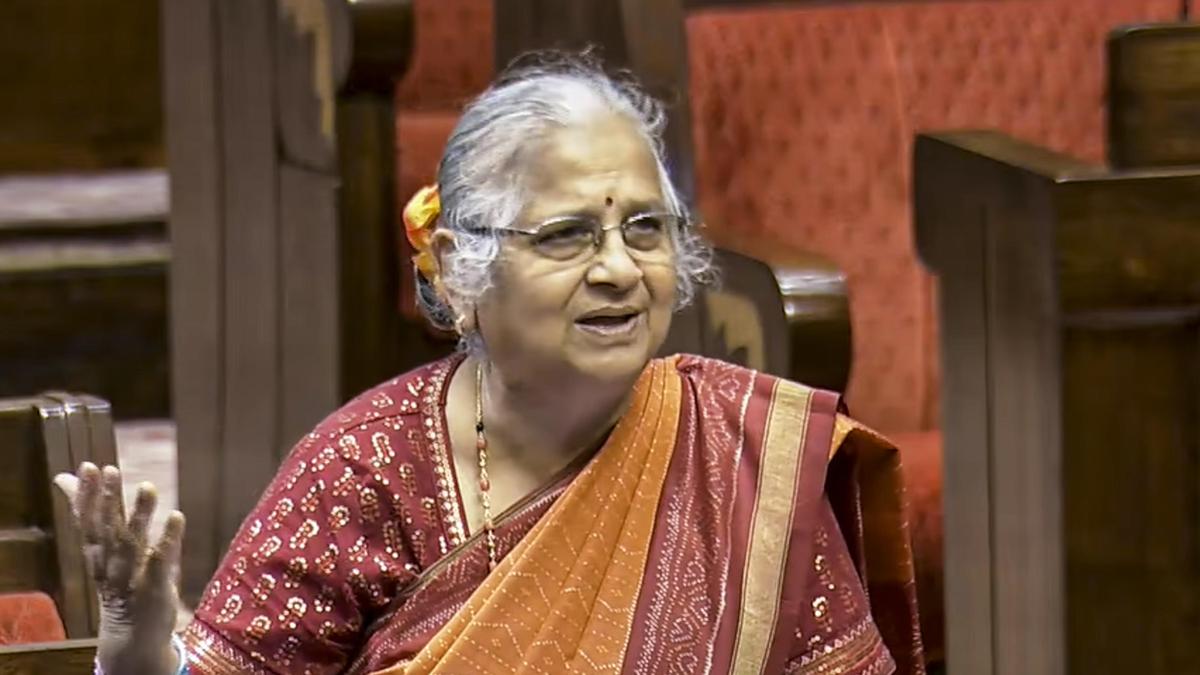
New Delhi: In a significant appeal during the ongoing Winter Session of Parliament, nominated Rajya Sabha member Sudha Murty has called upon the government to establish clear guidelines for how children are portrayed on social media platforms. Her remarks reflect growing concern over the rapidly rising trend of parents and creators posting content involving children — often with a view to gaining followers or monetising their child’s presence.
Murty voiced her concerns during the “Zero Hour,” emphasising that while social media offers many advantages, there is a disturbing flip side for children. She noted that in many cases, innocent children — unaware of the long-term effects — are exposed to ads, glamorised visuals, dance videos, and sometimes over-the-top costumes with the hope of generating large follower counts and financial benefits for parents.
> “Children are our future, and we should develop our children in a good value system, good education, sports and many other activities,” she said.
Murty drew a distinction between traditional media — where there are existing regulations governing the use of children in advertisements and films — and social media, where such regulatory oversight is virtually non-existent. While there are strict rules in place for “child actors” in ads or cinema, she pointed out, the same does not apply to children featured on social media content under parental or influencer control.
According to Murty, this gap in regulation has worrying implications. She warned that children who are showcased excessively on social media risk losing their innocence, missing out on sports, social interactions, and formal education — all in favour of content creation. She questioned whether children, often too young to understand the consequences, can meaningfully “consent” to being exposed publicly. Murty also referenced practices in some advanced countries — including regulatory norms that govern the portrayal of children online — suggesting that India should consider a similar path.
She urged the central government to enact rules around: the kind of content children can appear in on social media; the attire, costumes, dance content or other commercialised depictions; mechanisms to ensure their well-being, privacy and psychological safety. In her view, unrestricted visibility of children on digital platforms amounts to giving them “over-exposure,” which may inflict long-term psychological harm.
Why this plea matters now
The call by Sudha Murty comes at a time when the digital environment and influencer-driven social media landscape are expanding rapidly in India.
A growing number of parents are sharing pictures and videos of their children — some innocent and family-oriented, others more commercial or performance-oriented — to gain visibility and followers. This often leads to what is now widely discussed as “child influencer” phenomenon. But without regulatory guardrails, such exposure can risk a child’s mental well-being, social development and privacy.
Earlier in 2025, there was an attempt through judicial intervention to impose blanket restrictions on social media usage for children below 13 years — a plea that was rejected by the Supreme Court of India (SC). The court ruled that such restrictions constituted a “policy matter” and should be dealt with through legislation, not court orders.
That verdict highlights the need for regulatory or legislative action, rather than relying solely on court-mandated bans. Sudha Murty’s intervention echoes this principle, urging lawmakers to proactively craft guidelines instead of reactive legal measures.
Further, research and surveys cited by media have shown growing concerns among parents about children spending excessive hours on social media — sometimes 3 to 6 hours a day, or even more. Some parents report behavioural changes: increased irritability, reduced interest in studies or sports, and signs of restlessness or addiction-like behaviour.
This makes the debate about children’s portrayal and participation on social media platforms critical not just from a privacy standpoint, but also from a child-welfare and mental-health perspective.
What the new regulation could look like
Drawing from existing regulations governing children in advertisements and films, as well as suggestions from experts, a robust regulatory framework in India could include:
- Age verification and parental consent for posting children’s content
- Restrictions on commercial exploitation of children online
- Guidelines for appropriate content — avoiding sexualised costumes, mature dance, or activities unsuitable for minors
- Rules limiting monetisation or influencer-style endorsements involving children
- Mandatory disclosures when content features a child, including potential long-term psychological implications
- Provisions for children’s right to privacy, withdrawal of consent upon turning 18, and protection against digital exploitation
Such norms could help balance the benefits of social media — creativity, self-expression, community — with the responsibility to protect children’s emotional, psychological and social well-being.
A call for wider awareness and policy action
Sudha Murty’s plea now shifts responsibility to policymakers, parents, creators and social media platforms. As a society, there is a need for greater awareness of how early exposure on digital media can affect a child’s development.
Parents, especially, must reflect on whether they are prioritising short-term fame or financial gain over a child’s long-term welfare and dignity. Social media influencers and content-sharing platforms too carry a duty to uphold ethical standards when children are involved.
For India, introducing regulations on children’s portrayal on social media could become a meaningful step in modern child protection — one that keeps pace with technological change, yet safeguards the innocence and future of its youngest citizens.


