
Rupee Crosses 90-Mark Against US Dollar: Impact On Markets, Consumers
The fall came amid weak trade and portfolio flows, persistent importer demand, and uncertainty surrounding the India-US trade deal.
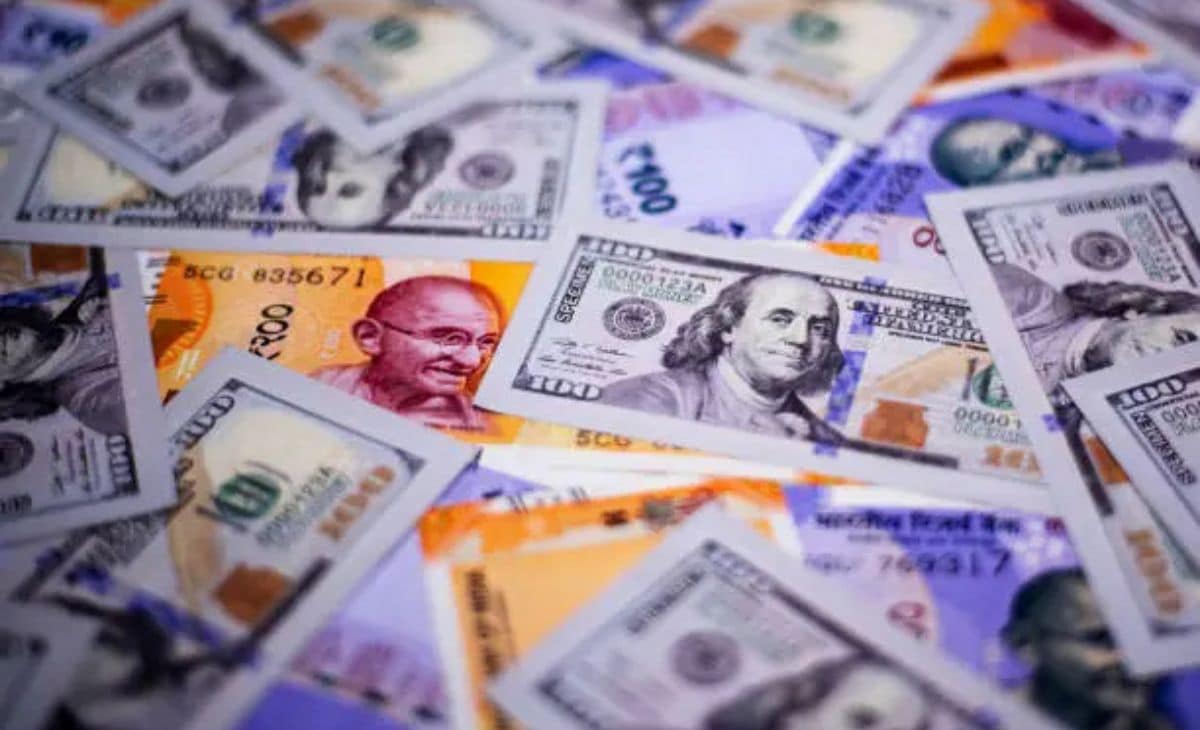


On December 3, 2025, the Indian rupee slid to a record low against the US dollar — trading at around ₹90.14 per US $. This marks the first time ever the rupee has crossed the psychologically and historically significant ₹90 barrier. Analysts describe the move as the culmination of a sustained depreciation trend throughout 2025 — which has seen the rupee lose roughly 5 percent year-to-date, making it among the worst-performing Asian currencies this year. Despite India’s underlying economy showing signs of strength — including robust GDP growth — the rupee’s fall underscores how external factors, global investor sentiment, and trade dynamics have increasingly weighed down the currency.
Unpacking the Fall: The Key Drivers
The steep slide of the rupee isn’t the result of a single event, but rather a combination of global and domestic pressures that converged over months. Here are the main forces driving the depreciation:
1. Capital Outflows & Weak Foreign Investments
One of the most potent factors behind the rupee’s slide is the sharp pullback by foreign investors. Foreign portfolio investors (FPIs) have withdrawn large sums from Indian equities and debt markets in 2025, creating strong demand for US dollars. At the same time, foreign direct investment (FDI) and external commercial borrowings remain weak — insufficient to offset outflows and the high demand for dollars. The shortfall creates a structural imbalance in currency flows: more rupees being sold, more dollars being bought — putting downward pressure on the rupee.
2. Trade Imbalance and Surge in Dollar Import Demand
Another major burden is India’s trade dynamics. India’s import bill — especially for crude oil, metals, bullion and other commodities — remains high. In 2025, record-high metal and bullion prices, together with elevated crude oil costs, have inflated the country’s import bill, pushing up demand for foreign exchange. Meanwhile, exporters have been reluctant to convert their dollar revenues back into rupees. With the rupee depreciating, exporters delay dollar-to-rupee conversions anticipating better rates — which reduces dollar supply in the market, adding to pressure. The result: a widening current-account deficit (CAD), and a structural imbalance in foreign exchange supply and demand that hurts the rupee.
3. Global Macro Environment — Strong Dollar, US Rate Differentials & Risk-Off Sentiment
Globally, the US dollar remains strong. The interest-rate differential — reflecting higher returns on US Treasury assets relative to emerging markets — continues to draw capital flows toward the US. As a result, global investors prefer dollar-denominated assets over emerging‐market assets, including Indian equities and bonds. Moreover, geopolitical and trade-policy uncertainties — including steep tariffs imposed by the US on Indian exports — have prompted risk-off sentiment, reducing investor appetite for emerging-market currencies like the rupee. As global capital seeks refuge in safe assets, the rupee becomes vulnerable.
4. Delay / Uncertainty Over a Trade Deal with the US
One of the more India-specific factors today is the prolonged uncertainty over a comprehensive trade agreement with the US. Market participants believe that a trade deal with Washington could improve trade flows, reduce tariff pressures, boost export confidence — and bring in fresh dollars. But repeated delays have instead sapped sentiment. The result: a negative feedback loop. Tariffs continue to weigh on exports. Foreign investors stay cautious. Dollar inflows remain muted — all reinforcing depreciation pressures on the rupee.
5. Limited Intervention by the Reserve Bank of India (RBI) — Letting the Rupee Adjust
Unlike previous years, when the central bank would aggressively intervene to maintain currency stability, this time around the RBI’s support has been more cautious and calibrated. While it has sold dollars at intervals to prevent runaway depreciation, its interventions have not been strong enough to arrest the slide.
Analysts suggest this is a strategic choice: allowing gradual depreciation so the rupee can act as a “shock absorber” — adjusting to global headwinds and external pressures instead of being artificially defended. But this tolerance for depreciation has its limits: it helps protect foreign-exchange reserves and avoids excessive volatility — but also means stronger headwinds for imports and consumers in rupee-denominated terms.
What Today’s Slide Means — For the Economy, Consumers and Markets
The rupee’s breach of ₹90 per dollar is not just a symbolic event — it carries real consequences for multiple stakeholders across the economy.
For Importers, Corporates & Consumers — Cost Pressure AheadA weaker rupee directly translates into higher costs for imports — crude oil, metals, electronics, machinery, gold, etc. This can lead to imported inflation: costlier fuel, raw materials, consumer goods. Companies dependent on imported inputs may see their margins squeezed. Households, especially those purchasing imported goods or paying for foreign education/travel, may feel the pinch.
For Exporters & Dollar-Earning Sectors — Potential Relief
For firms earning in dollars — such as export-oriented manufacturers and especially IT services/exporters — a weaker rupee increases the rupee value of their dollar revenue. Indeed, in today’s equity market reaction, major IT firms saw share prices rise as investors recalibrated valuations based on stronger rupee-denominated earnings.
External Balances & Macro Stability — Strain, but Some Cushion
The rupee’s slide emphasizes stress in India’s external position: widening current-account deficits, sustained capital outflows, weak foreign inflows. At the same time, moderate inflation and a robust banking/financial system offer some buffer. In essence, the rupee is acting as a “shock absorber,” absorbing some external stress instead of forcing abrupt macro adjustment.
Market Sentiment & Investor Confidence — At a Crossroads
Currency weakness tends to rattle investor confidence. A depreciating rupee may deter foreign capital flows at a time when India needs stable inflows. If depreciation continues, it may raise questions about inflation, cost pressures, impact on trade and overall economic stability. Conversely, if exporters benefit and dollar revenues rise, certain sectors may prosper — but the macro balance remains delicate.
What to watch in the coming days:
- Whether the RBI steps up interventions via more aggressive dollar sales or forward market operations.
- Any breakthroughs in talks between New Delhi and Washington on a trade deal — a resolution could calm investor nerves and bring some dollar inflows.
- Movement in global factors: US interest rates, dollar strength, oil prices — all of which could influence INR swings.
- Domestic macro data: trade deficit, import bill, inflation, FDI & FPI flows, and how companies and consumers respond to currency weakness.
Conclusion: A Warning Sign — But Not a Collapse
The rupee’s breach of ₹90 per dollar is a wake-up call: it shines a spotlight on external vulnerabilities, policy trade-offs, and structural stresses. However, it’s not a signal of economic collapse. India’s underlying economy remains resilient. Growth continues. Exports (especially dollar-based) may get a boost. The financial system remains stable. But the slide does highlight the costs of global financial volatility, trade uncertainty, and the limits of external dependencies. In coming weeks, currency markets, policymakers, and global investors will be watching closely. Whether the rupee stabilises, recovers — or continues its slide — will depend on a delicate interplay of global tides and domestic policies.


