
Rahul Gandhi Blames IndiGo Crisis on ‘Government Monopoly Model’ After Massive Flight Disruptions
Rahul Gandhi said it is ordinary Indians who pay the price in delays, cancellations and helplessness
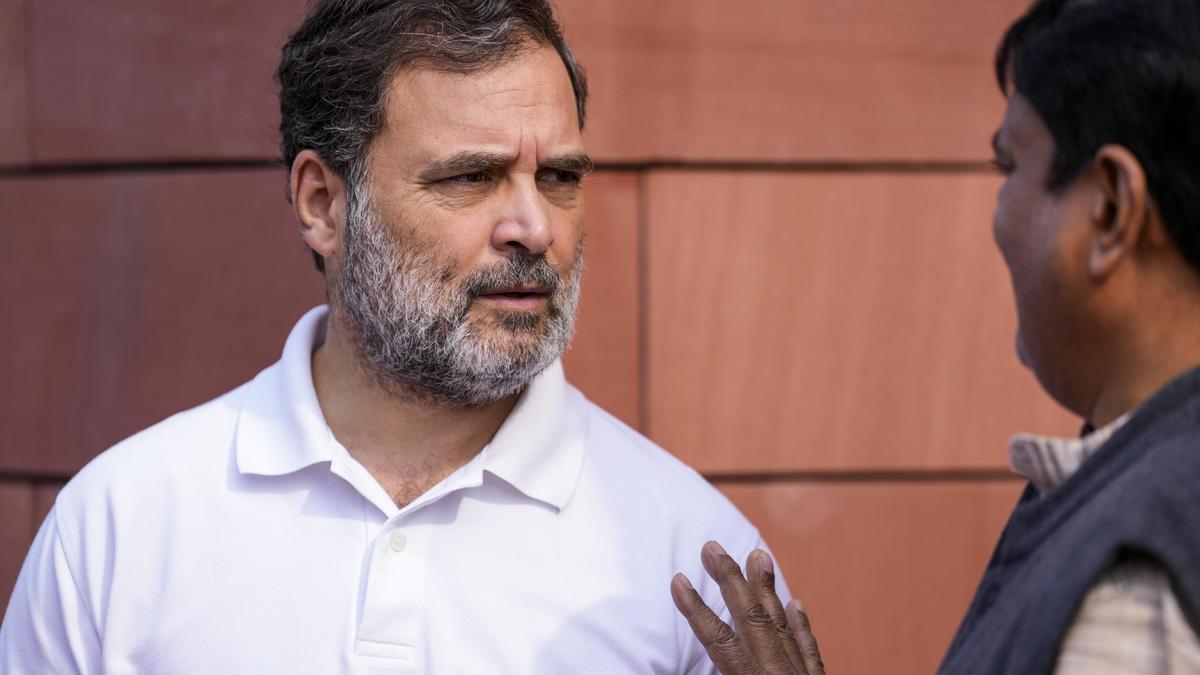
Rahul Gandhi said it is ordinary Indians who pay the price in delays, cancellations and helplessness
Congress leader says recent airline chaos reflects deeper structural flaws in India’s aviation sector as government, carriers, and passengers grapple with widespread cancellations.
Congress leader Rahul Gandhi on Thursday criticized the central government for what he called a “monopoly model” in India’s aviation sector, claiming it is responsible for the week’s widespread disruptions at IndiGo that left thousands of passengers stranded across major airports. His remarks follow days of cancellations, delays, and operational breakdowns at the country’s largest carrier, sparking public frustration and renewed debate about regulatory oversight and competition in Indian aviation.
⸻
Political Reaction to the IndiGo Crisis
Gandhi’s comments came in a post shared on X, where he argued that the ongoing turmoil highlights systemic failures rather than isolated operational lapses. “This is the cost of the government’s monopoly model,” he wrote, referring to what he alleges is increasing consolidation and reduced competition in the industry.
Congress leaders echoed the criticism, accusing the government of promoting an environment in which a few dominant players control the bulk of domestic air travel. They argue that such concentration leaves little room for transparency, accountability, or resilience during operational crises.
The ruling Bharatiya Janata Party (BJP), however, dismissed the criticism as “misinformed” and said aviation reforms under the current administration have significantly expanded passenger capacity, airport development, and private-sector investment.
⸻
IndiGo’s Operational Crisis: What Happened
IndiGo, which operates more than 60 percent of domestic flights in India, has faced intense scrutiny after a technical and staffing breakdown triggered widespread delays and cancellations. Passengers at airports in Delhi, Mumbai, Bengaluru, and Chennai reported waiting for hours without clear communication from airline officials.
Airport authorities confirmed that disruptions began earlier in the week when a combination of crew shortage, aircraft rotation issues, and system failures affected the carrier’s scheduling. The Directorate General of Civil Aviation (DGCA) sought detailed explanations from IndiGo and asked the airline to restore normal operations at the earliest.
Several passengers described chaotic scenes, with long queues at check-in counters and confusion over rebooking and refunds. Videos circulating across social media platforms showed crowds demanding assistance from airline staff.
IndiGo said in a statement that it “regrets the inconvenience caused” and is taking “urgent steps to stabilize operations.”
⸻
The Wider Context: A Sky Dominated by a Few Carriers
Gandhi’s critique taps into a broader debate about market concentration in India’s aviation sector. With Air India and Vistara under the Tata Group and IndiGo commanding a dominant share, experts say India effectively operates with a duopoly.
Before the pandemic, smaller carriers such as Jet Airways, Go First, and AirAsia India contributed to a more competitive landscape. However, Jet Airways collapsed in 2019, Go First suspended operations in 2023, and other carriers struggled with rising fuel costs and regulatory pressures.
A senior aviation analyst said, “Whenever the market is concentrated in the hands of one or two operators, systemic shocks tend to have larger ripple effects.” He added that disruptions at a single large carrier can affect nationwide schedules due to interconnected routes and limited alternative options.
⸻
Government’s Response to the Criticism
The Ministry of Civil Aviation rejected claims of promoting monopoly, stating that the aviation ecosystem has expanded significantly in recent years. Officials highlighted the UDAN regional connectivity scheme, new airport infrastructure, and increased private-sector investment as evidence of competitive progress.
A ministry spokesperson said, “India’s aviation sector remains open, competitive, and governed by strict regulatory oversight.” The official also pointed out that global aviation markets similarly see dominant carriers due to high capital and operational costs.
Government sources indicated that DGCA is monitoring IndiGo closely and may issue further directives if disruptions persist.
⸻
Impact on Passengers and the Travel Industry
Travel agencies reported a surge in last-minute cancellations and flight rescheduling as IndiGo struggled to stabilize operations. Business travelers, students, and holiday passengers heading into the peak travel season faced escalating airfares and limited availability on other carriers.
Online complaint forums documented hundreds of posts from affected passengers, including missed hospital appointments, lost business opportunities, and disrupted holiday plans. Consumer-rights groups criticized what they called “inadequate compensation frameworks” and demanded stricter penalties for airlines that fail to provide timely assistance during crises.
Hospitality associations also noted an uptick in hotel bookings by stranded travelers, particularly near major airports.
⸻
Experts Say Multiple Factors Drive Airline Instability
Aviation experts caution against attributing the crisis solely to government policies. They cite industry-wide challenges, including:
• High aviation turbine fuel (ATF) prices
• Shortage of trained pilots and cabin crew
• Post-pandemic financial strain
• Limited maintenance, repair, and overhaul (MRO) capacity
• Stringent operating margins
One expert explained, “India is one of the world’s fastest-growing aviation markets, but infrastructure and workforce expansion have not kept pace.”
Others argue that airlines tend to over-schedule flights during peak seasons to maximize revenue, increasing vulnerability when small disruptions occur.
⸻
Opposition vs. Government: Clashing Narratives
Congress leaders say the recurring aviation disruptions reflect policy shortcomings and the government’s failure to ensure competitive market conditions. They point to earlier controversies involving airport privatization, airline mergers, and regulatory decisions as evidence of “over-centralization.”
The BJP counters that the opposition is attempting to politicize operational issues and asserts that reforms have strengthened—rather than weakened—the sector.
Political analysts say Gandhi’s remarks reflect an effort to amplify consumer frustration and highlight governance gaps ahead of upcoming state and national elections.
⸻
What Comes Next for IndiGo?
IndiGo has deployed additional crew and aircraft to minimize delays, according to airline officials. It also held internal emergency meetings to streamline operations, prioritize high-traffic routes, and improve real-time communication with passengers.
DGCA is expected to release a preliminary assessment soon, which may include recommendations for operational adjustments or penalties.
While the airline remains the backbone of India’s domestic air travel network, analysts warn that recurring disruptions could undermine public trust if corrective actions are not taken swiftly.
⸻
Future Outlook: A Need for Robust Competition and Resilience
The current crisis has reignited questions about resilience in India’s aviation sector. Industry observers stress the importance of diversifying market players, improving regulatory oversight, strengthening workforce pipelines, and investing in modernized systems.
Gandhi’s “monopoly model” critique, though politically charged, reflects concerns shared by aviation experts worldwide: that overly concentrated markets often lack flexibility during operational shocks.
For passengers and policymakers alike, the IndiGo breakdown serves as a reminder that rapid growth in air travel must be matched by robust systems capable of .


