
PMK Rift Deepens as Senior Leader Rules Out 2026 Poll Reconciliation
Insider says feud between S. Ramadoss and Anbumani has widened, leaving party cadres uncertain ahead of Assembly election
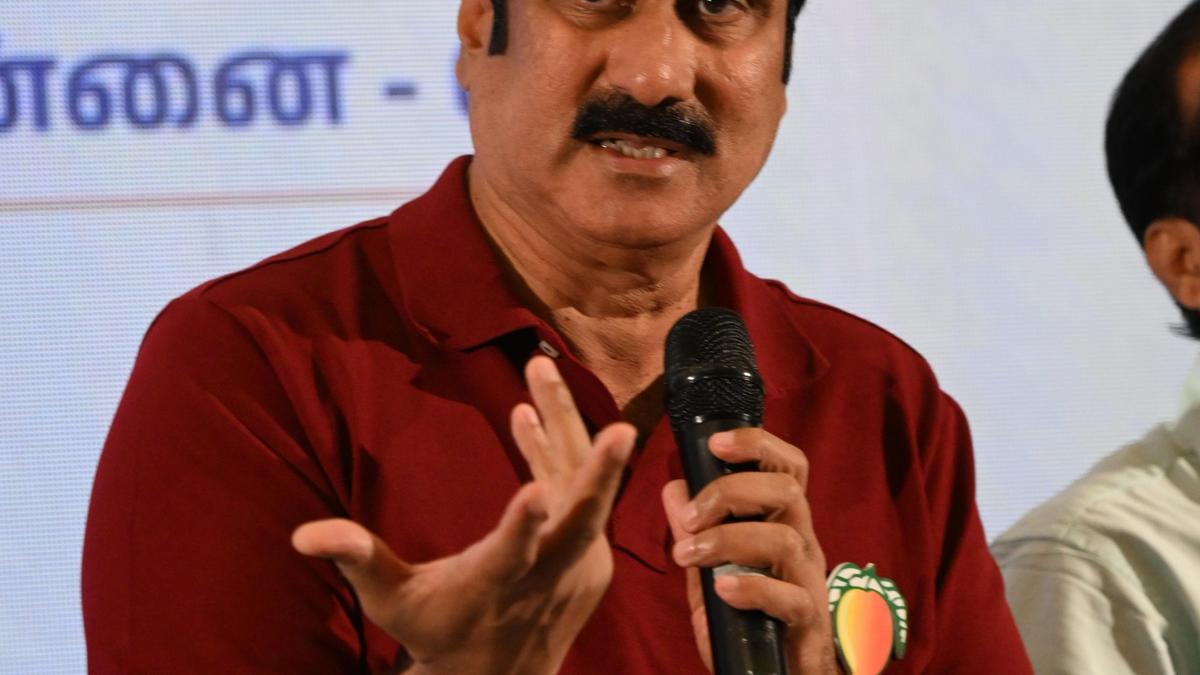
A senior Pattali Makkal Katchi (PMK) leader familiar with internal discussions says there is “no possibility” of reconciliation between party founder Dr. S. Ramadoss and his son Anbumani Ramadoss before the 2026 Tamil Nadu Assembly election, underscoring a widening rift that has placed the party’s organisational unity under strain and raised questions about its electoral strategy. The leader, who spoke on condition of anonymity because he is not authorised to discuss internal matters publicly, says several attempts at mediation have failed and “the divide has only grown sharper in recent months.”
Internal Tensions Come Into the Open
The PMK has long projected itself as a caste-based yet reform-oriented regional force, maintaining disciplined organisational structures under the leadership of the Ramadoss family.
However, tension between father and son, which party insiders say has simmered for more than a year, appears to have reached an unprecedented point.
According to the senior leader, differences around party alliances, candidate selection, and the political direction of the PMK have intensified.
“Both leaders have distinct views on the future of the party,” the leader said. “The disagreements are no longer restricted to strategy; they reflect deeper ideological and generational differences.”
While the PMK has historically managed internal disputes quietly, the current rift has become more visible to cadres and district-level functionaries, many of whom are unsure which leader will steer the party’s electoral negotiations in the lead-up to 2026.
⸻
Alliance Politics at the Heart of Dispute
Tamil Nadu’s competitive electoral landscape has made alliances crucial for regional parties.
The PMK has frequently shifted its alliances between the AIADMK, DMK, and the BJP-led coalition, depending on political calculus.
A person familiar with the party’s internal dynamics says the father and son disagree on whether the PMK should pursue an independent identity or align early with a major Dravidian party.
“Dr. Ramadoss is cautious about tying the party too closely to national parties,” the insider said. “Anbumani, on the other hand, believes the PMK needs a stronger, modern coalition-based approach to stay electorally relevant.”
This divergence, party workers say, has influenced organisational decisions, candidate grooming, and communication strategies.
⸻
Cadres Worried Ahead of Crucial 2026 Polls
Grassroots members in northern districts — where the PMK draws significant support — say cadres are increasingly concerned about mixed signals emanating from the top.
“We need clarity on who leads us into negotiations, who finalises candidates, and who addresses cadre concerns,” said a district-level functionary from Villupuram. “Everyone recognises the contributions of both leaders, but confusion hurts the party on the ground.”
The PMK’s performance in the 2021 State election was modest, and party strategists acknowledge that a divided leadership may weaken its bargaining power in seat-sharing discussions for 2026.
⸻
Past Attempts at Mediation
According to the senior leader who spoke to this publication, multiple rounds of mediation over the past six months — involving senior office-bearers, community leaders, and retired party veterans — have failed.
“There was a belief early on that time would resolve things,” the leader said. “But the differences are now hardening.”
Some members have privately appealed to both leaders to present a united front at least publicly.
However, insiders say the two have not shared a political stage for months, a notable departure from earlier years when they routinely appeared together at strategic moments.
⸻
Impact on Party Strategy and Public Messaging
Analysts note that the PMK’s political messaging has appeared inconsistent in recent months.
Statements released from party headquarters at Thailapuram have sometimes contradicted remarks made by Anbumani or members of his team.
“Parties can survive ideological differences, but not communication breakdowns,” said K. Jayavel, a Chennai-based political analyst. “When a party’s central message is unclear, the electorate becomes uncertain, and competitors fill the vacuum.”
Jayavel added that the PMK’s relevance in the 2026 election depends on whether it can position itself as a decisive coalition partner.
“A fractured leadership weakens that image,” he said.
⸻
Community Dynamics and Expectations
The PMK’s core support base — largely drawn from the Vanniyar community — has also been responding to the leadership tussle.
Community organisations that usually coordinate with the party on political outreach say they are unsure whom to approach regarding caste-related demands and welfare assurances.
A senior member of a community association in Kallakurichi said the group has interacted less frequently with the party in recent months.
“We are waiting to see who actually takes the lead,” he said. “We want the party to remain strong. Confusion weakens the community’s bargaining strength.”
⸻
Possible Electoral Scenarios
Political observers outline several paths the PMK could take if the rift persists:
1. Dual leadership model — where both leaders operate independently but coordinate on election matters.
2. One leader stepping back publicly — for the sake of unity, though insiders say neither appears inclined at the moment.
3. A clearer organisational split — where factions operate autonomously within the party’s framework, though this risks long-term fragmentation.
A split in the party, while not imminent, is a concern raised by several cadres.
“PMK is a family-driven party,” a former office-bearer said. “If the family is divided, the organisation naturally feels unstable.”
⸻
Party Silent as Speculation Grows
Both Dr. Ramadoss and Anbumani have not issued public statements addressing the internal divide.
The party’s official spokesman, when contacted, declined to comment, saying only that “the PMK remains focused on preparing for the 2026 Assembly election.”
Political analysts say silence may be a strategic attempt to prevent further speculation.
However, as the senior leader’s comments suggest, internal consensus is unlikely anytime soon.
⸻
Looking Ahead: Uncertainty as the Election Nears
With less than two years to go before the next Tamil Nadu Assembly election, clarity within the PMK remains essential for coalition partners, cadres, and voters.
If the leadership rift continues, analysts warn that the party could lose negotiating leverage, especially in northern districts where the PMK has historically been a kingmaker.
“The PMK plays its strongest role when it appears unified and disciplined,” Jayavel said. “If internal disputes overshadow public outreach, 2026 may become more challenging than expected.”
As the senior PMK leader’s remarks indicate, the coming months will test whether the party can bridge generational and ideological divides — or whether the rift becomes a defining feature of its political future.


