
Parliament Winter Session Begins Amid Clash Over Voter Roll Revision
The government aims to pass key reforms as the opposition demands debate on the electoral exercise it calls a threat to democracy.
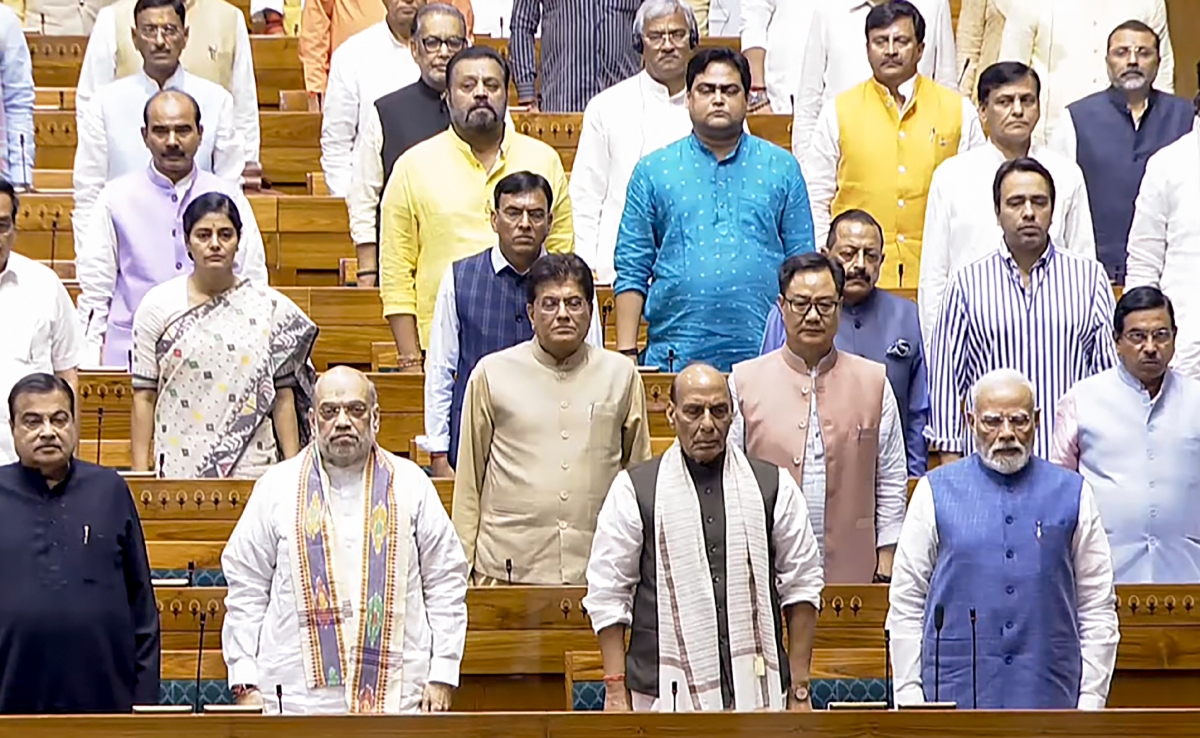
NEW DELHI, India — The Winter Session of Parliament commenced Monday, setting the stage for a political confrontation between the government and opposition parties over the Election Commission's Special Intensive Revision (SIR) of electoral rolls . The session, scheduled to run until December 19, will see the government push a legislative agenda featuring 14 bills, including landmark reforms to the atomic energy and higher education sectors . The opposition INDIA bloc, however, has signaled it will insist on discussions concerning the SIR, national security following a recent Delhi blast, and economic issues, potentially threatening the smooth functioning of the House .
Opposition Digs In on SIR as Key Issue
The SIR of electoral rolls has emerged as the primary flashpoint. Opposition leaders have termed the SIR a "de novo National Registration of Citizens (NRC)," alleging the process places the burden on voters to prove their citizenship and could lead to mass disenfranchisement . Over the weekend, opposition leaders made the SIR a central theme in multiple preparatory meetings, including an all-party meet chaired by Defence Minister Rajnath Singh and the Business Advisory Committee (BAC) meetings of both Houses .
"The SIR was conducted across the entire state in a very short span of time, which is impossible," said Congress MP Pramod Tiwari, highlighting one of the key criticisms of the exercise's tight timeline . Rashtriya Janata Dal (RJD) leader Manoj Jha argued that without a debate on these public concerns, "Parliament will remain a museum-like structure" . The Congress party has also labeled the 19-day session as "unusually delayed" and "truncated," accusing the government of having "no business to transact" .
Government's Legislative Agenda and Stance
Despite the looming showdown, the government has outlined an ambitious legislative plan for the session. The agenda is headlined by The Atomic Energy Bill, 2025, which seeks to govern the use and regulation of atomic energy and open up the civil nuclear sector to private players . Another significant bill is the Higher Education Commission of India Bill, aimed at establishing a commission to facilitate independent and self-governing universities .
Other proposed legislations include the National Highways (Amendment) Bill for faster land acquisition, the Corporate Laws (Amendment) Bill, 2025 to tweak company laws, and the Securities Markets Code Bill, 2025 to consolidate market regulations . Parliamentary Affairs Minister Kiren Rijiju has expressed the government's willingness to discuss any issue as per rules and urged for a constructive session . "No one said that Parliament will not function or will not let it function," Rijiju stated, adding that the government is "ready to listen to the opposition" .
Election Commission's Defense and SIR Extension
The Election Commission (EC) has firmly dismissed allegations of "mass disenfranchisement," telling the Supreme Court that such claims are an attempt to "politicise" the exercise . The EC asserts that the SIR is a "cooperative and participatory exercise" involving electors and political parties, with features like house-to-house visits and a claims-and-objections stage that serve as a form of "social audit" .
Amid opposition criticism that the "tight timelines" were hindering voters and officials, the EC on Sunday announced a one-week extension for the SIR process . The distribution of enumeration forms will now continue until December 11, with the draft electoral rolls publishing on December 16 . The final electoral roll is now scheduled for publication on February 14, 2026 . The SIR is currently underway in 12 states and Union Territories, including Uttar Pradesh, where a petition was recently filed in the Supreme Court seeking a three-month extension .
Broader Political Context and Other Issues
The political climate is charged following the ruling BJP-led National Democratic Alliance's (NDA) overwhelming victory in the recent Bihar Assembly elections . This session is also the first presided over by new Vice President and Rajya Sabha Chairman C.P. Radhakrishnan, with the Opposition keenly watching the functioning of the House under him . Ahead of the session, a Rajya Sabha bulletin reminded members of parliamentary decorum, stating that rulings from the Chair should not be criticized and that no slogans should be used in the House .
Beyond the SIR, the opposition has listed other demands for discussion. These include the recent Delhi car explosion, issues of national security, the implementation of labour codes, air pollution, and economic challenges . The government has also decided to hold a discussion on the 150th anniversary of the national song, 'Vande Mataram' .
A Test for Parliamentary Democracy
The Winter Session of 2025 is poised to be a critical test for India's parliamentary democracy. The government seeks to translate its political capital into a robust reform agenda, while the opposition is rallying around issues of electoral integrity and public accountability. The outcome of this session—whether it becomes a forum for constructive debate or succumbs to disruptions—will depend heavily on the balance struck between legislative progress and holding the executive accountable. The nation watches to see if its elected representatives can navigate these contentious waters to fulfill their constitutional duties.


