
NIA Raids Eight Kashmir Locations in "White-Collar Terror" Probe Linked to Delhi Blast
Searches in Pulwama, Shopian, and Kulgam target a radicalization module accused of recruiting professionals for the Red Fort car blast that killed 15.
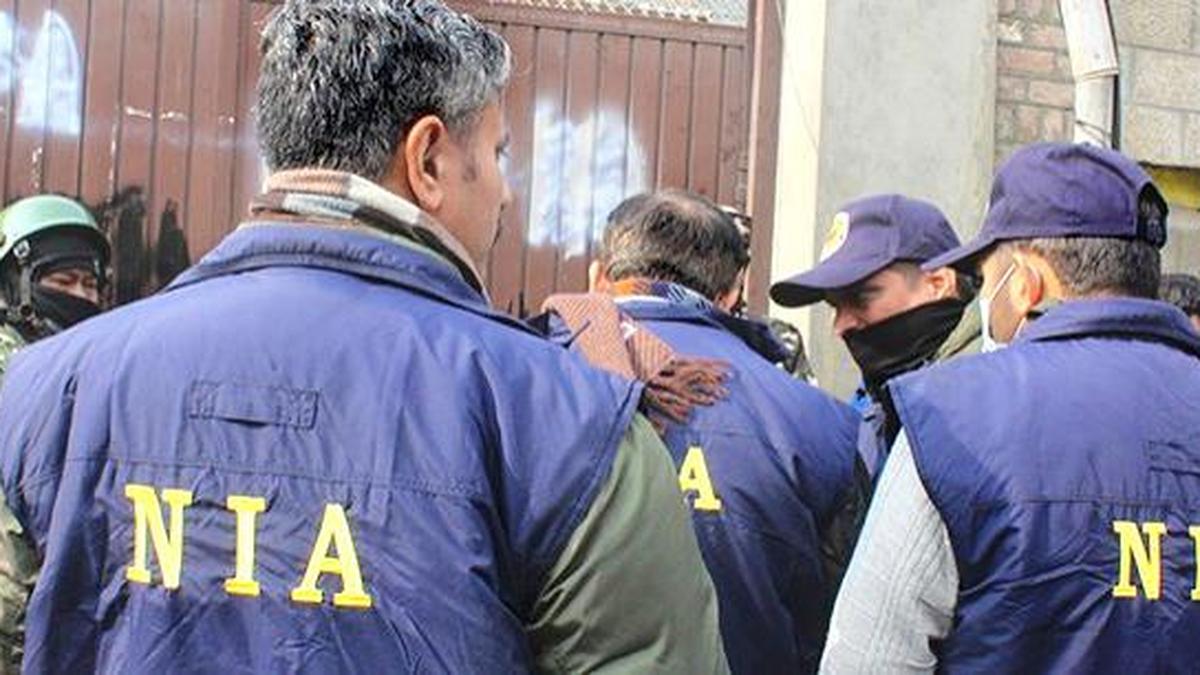
SRINAGAR, India — The National Investigation Agency (NIA) conducted coordinated raids at eight locations across southern Kashmir on Monday, intensifying its probe into a “white-collar” terror module linked to last month’s deadly car blast near Delhi’s Red Fort . The searches focused on the districts of Pulwama, Shopian, and Kulgam, targeting individuals allegedly involved in radicalizing and recruiting members for the module . Officials said the operation aims to dismantle the network behind the November 10 blast that killed 15 people and injured several others .
Operation Details and Key Figures
The NIA, supported by local police and central armed forces, launched simultaneous early morning raids at multiple residential premises . A key location was the Shopian residence of Moulvi Irfan Ahmad Wagay, identified by investigators as the alleged mastermind behind radicalization and recruitment for the module . Wagay was initially arrested by police in October, with the NIA taking him into its custody last month after assuming control of the blast investigation .
Searches were also conducted in the Pulwama district areas of Koil, Chandgam, Malangpora, and Samboora, locations linked to individuals associated with the Delhi blast case . Additionally, the NIA raided the residence of Dr. Adeel Ahmad Rather in Kulgam. Rather was arrested in the first week of November from Saharanpur in Uttar Pradesh . The agency has seized electronic devices and documents for forensic analysis to map the network's finances and communications further .
The "White-Collar" Terror Module and Delhi Blast
The raids are part of the investigation into a "white-collar terror" module, a term security agencies use for networks involving educated individuals or professionals . The module is alleged to have been behind the car blast on November 10 near the Red Fort Metro Station in Delhi . The explosion, caused by a suicide bomber in a vehicle at a traffic light, resulted in 15 fatalities and spread panic across the national capital .
Another key suspect in the case is Jasir Bilal Wani, also known as Danish, a political science graduate from Qazigund in Anantnag district . Investigators describe Wani as a technical expert who modified drones, upgraded their batteries and cameras, and attempted to integrate explosive payloads for use in crowded areas . The NIA alleges that his designs mirrored tactics used by Hamas and ISIS .
Broader Security Context in Jammu and Kashmir
Monday's operation occurs against a backdrop of evolving militancy in Jammu and Kashmir. Security analyses note a shift toward "hybrid militancy," where individuals with no prior criminal records carry out attacks before blending into civilian populations . This phase has also been marked by the rise of "façade groups" like The Resistance Front (TRF), which operate as offshoots of Pakistan-based legacy terror organizations such as Lashkar-e-Taiba (LeT) .
The region has witnessed a lethal escalation in violence in 2024-2025, including the high-profile Pahalgam massacre in April 2025 that killed 26 people, mostly Hindus . This attack prompted intensified counter-terrorism operations by Indian security forces . The NIA's recent raids are a continuation of these sustained efforts to dismantle terror networks, following a similar multi-state search operation in September 2025 .
Investigation Scope and Legal Proceedings
The investigation has revealed a trans-regional conspiracy, with the NIA identifying areas from Faridabad to Lucknow, Kanpur, Saharanpur, and parts of Jammu and Kashmir as "core zones" of the network's activity . The discovery of approximately 3,000 kilograms of explosives, including ammonium nitrate, from the module's associates in Faridabad had previously raised serious concerns for security agencies .
The case also has links to other ongoing terror trials. Just days before these raids, an NIA court in Lucknow convicted two individuals in a separate Al-Qaeda terror conspiracy case, revealing the persistence of efforts by banned organizations to radicalize and recruit youth in India .
Path Ahead for the Investigation
The NIA's operation underscores a strategic focus on unearthing the logistical and ideological backbone of terror modules. By targeting the radicalization chain and technical support cells, authorities aim to prevent the execution of more sophisticated attacks . Forensic analysis of the seized materials is expected to play a crucial role in identifying further links and potential collaborators .
Security experts indicate that the use of educated individuals in terror plots presents a distinct challenge, as they can facilitate more complex planning and avoid traditional profiling . The ongoing investigation will likely continue to explore the extent of this network's reach and its potential connections to broader militant infrastructures, both within and outside Kashmir.


