
Mamata Banerjee Escalates Anti-SIR Drive with Rallies Targeting Bengal's Border Districts
The West Bengal chief minister will lead protests in Malda, Murshidabad, and Cooch Behar, framing the Election Commission's voter roll revision as an attack on minority and refugee communities ahead of 2026 polls.
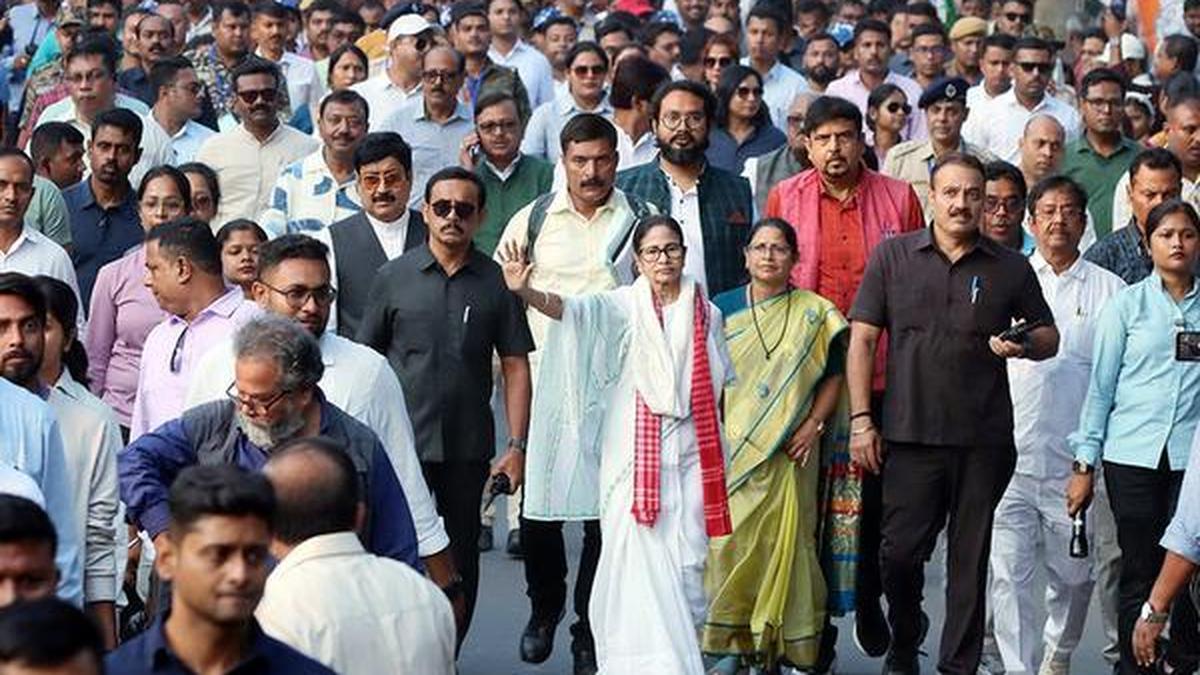
KOLKATA — West Bengal Chief Minister Mamata Banerjee is launching a major political offensive this week against a national voter list verification drive, scheduling a series of rallies in key border districts where the exercise has sown widespread fear and confusion . Banerjee will address rallies in Malda on Dec. 3 and Murshidabad on Dec. 4, followed by a large-scale mobilization in Cooch Behar on Dec. 9, marking the second phase of her campaign against the Election Commission's Special Intensive Revision (SIR) of electoral rolls . The Trinamool Congress (TMC) is positioning the rallies as a direct counter to the opposition Bharatiya Janata Party's (BJP) political narrative on immigration and citizenship .
Strategic Focus on Sensitive Border Regions
The choice of locations is strategically significant, targeting three politically sensitive districts with large minority, migrant, and historically displaced populations . Party insiders say the consecutive rallies signal a deliberate attempt to reclaim the political narrative ahead of the 2026 state Assembly polls, as the SIR exercise fuels acute anxiety over the scrutiny of personal documents, identity, and citizenship in these border areas . The Cooch Behar rally, scheduled for the historic Rash Mela Maidan, is being projected as Banerjee's biggest show of strength in northern Bengal this winter .
Local TMC units have already begun booth-level campaigns, stressing that the SIR's "errors and excesses" are disproportionately affecting border residents and families with fluid cross-border linkages . District leaders anticipate a large turnout from areas like Dinhata, Sitai, Sitalkuchi and Mekhliganj in Cooch Behar, where the revision process has triggered fear among poor rural households . Preparations are in high gear, with an emergency meeting of block presidents held Dec. 1 and a larger district-level session scheduled for Dec. 2 in Cooch Behar to finalize mobilisation plans involving ministers, MPs, and local officials .
The SIR: A Flashpoint of Fear and Politics
The Special Intensive Revision is a door-to-door verification drive to update electoral rolls, which the Election Commission of India is conducting in several states . However, in West Bengal, it has become entangled with deep-seated fears related to the National Register of Citizens (NRC), a separate citizenship verification process . Since the SIR began on Nov. 4, the exercise has been linked by political leaders and families to a spate of deaths across the state .
A detailed investigation by Frontline magazine documented at least 11 deaths between late October and early November—including six by suicide—allegedly driven by fear of disenfranchisement or deportation due to the SIR . The TMC has claimed the number of SIR-related deaths is as high as 40, with a party delegation recently accusing the Chief Election Commissioner of having "blood on his hands" . Banerjee has repeatedly denounced the SIR as a "backdoor NRC" and a coercive tool, questioning the urgency of a process she says took two years in 2002 but is now being compressed into a few months .
Clashing Narratives: "Infiltrator-Cleansing" vs. "Voter Protection"
The political battle lines over the SIR are sharply drawn. The ruling TMC frames its resistance as a fight to protect eligible voters, particularly the poor and minorities, from a centrally-driven campaign of intimidation aimed at altering the state's electoral demography . Banerjee has warned she would "bring down the BJP government at the Centre" if a single legitimate voter is wrongfully deleted .
The BJP, in contrast, accuses the TMC of politicizing the issue to shield an illicit vote bank of illegal migrants . Senior BJP leader Suvendu Adhikari has alleged Banerjee is trying to undermine the Election Commission and protect a vote bank her party has "nurtured for years" . The BJP contends the SIR is a legitimate and necessary clean-up of electoral rolls, and that the TMC's opposition stems from panic that fake voters will be removed .
Analyst Perspectives on Political Calculus
Political analysts observe that the controversy has shifted the political momentum in Bengal. Psephologist Biswanath Chakraborty noted that the TMC, which was on the back foot over corruption scandals, has seized the initiative by framing the SIR as an existential threat to Bengali identity, akin to its successful campaign against the Citizenship Amendment Act in 2019 . "They are reinforcing the Bengali identity issue, which in turn is serving to neutralise other issues working against it," Chakraborty said .
However, analysts also point to apparent contradictions in the TMC's stance. While top leaders like Banerjee and her nephew, MP Abhishek Banerjee, publicly oppose the SIR, the party's grassroots machinery is actively engaged in the revision process, assisting voters at the booth level . Chakraborty termed this a case of "blatant hypocrisy," where the party facilitates the exercise on the ground while condemning it from the podium .
Other observers suggest the BJP may have miscalculated the public mood. Veteran analyst Biswajit Bhattacharya said the confusion and fear created by the SIR, especially among the poor, is not generating a favorable climate for the BJP ahead of the election . He argued that the responsibility for maintaining accurate rolls lies with electoral officers, not citizens, and that the process has caused unnecessary trauma .
Mamata Banerjee's escalated rally schedule represents a high-stakes gamble to consolidate her core vote bank and win over communities feeling targeted by the SIR, particularly in the volatile border regions. The upcoming rallies are likely to further polarize the political landscape, cementing the SIR and the intertwined issues of identity and citizenship as the central themes of the 2026 election campaign.
The long-term impact will depend on whether public perception solidifies around the TMC's narrative of protection or the BJP's promise of a cleansed electoral process. The state government's ability to address the administrative chaos and allay genuine fears on the ground, even as it protests the exercise politically, will be critical. Furthermore, the Election Commission's handling of grievances and the final electoral roll data will ultimately test the validity of both parties' claims. What is clear is that in the charged atmosphere of West Bengal, an administrative exercise has been irrevocably transformed into a defining political battlefield, with Mamata Banerjee's latest rallies serving as the opening salvos in a long and bruising election year.


