
Israel Moves to Relocate 5,800 Northeast India Jews Under New Government Approval Plan
The Israeli government approves a long-discussed proposal to bring remaining Bnei Menashe community members to Israel amid cultural and humanitarian concerns.


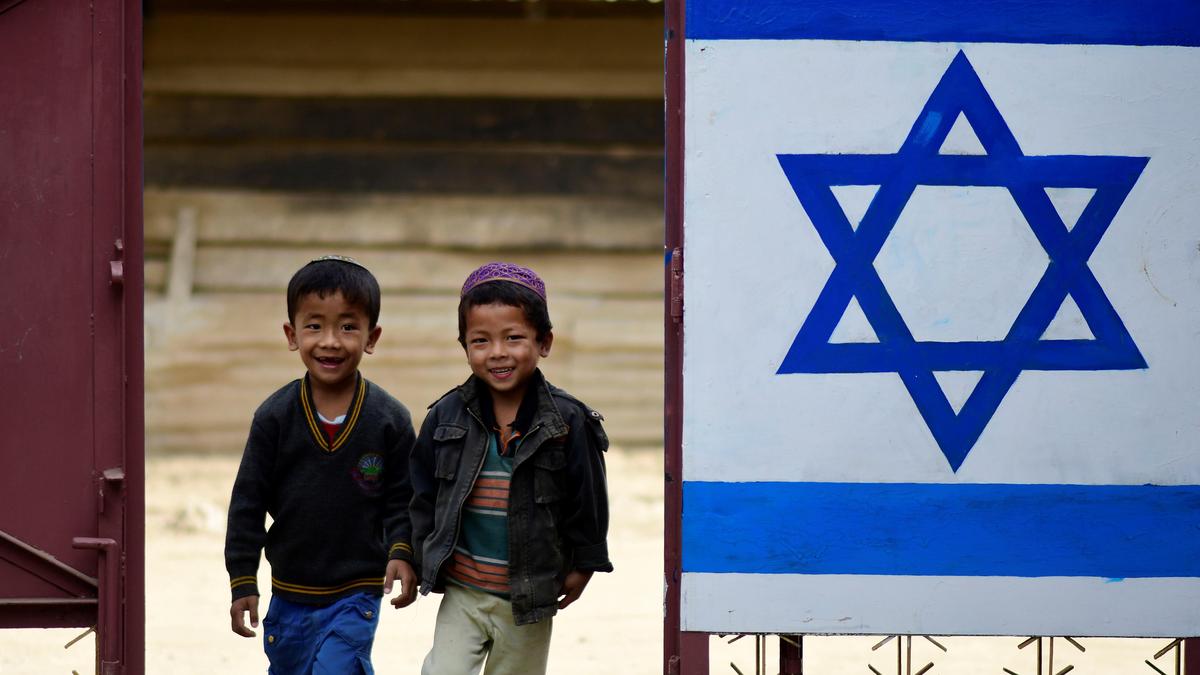
Israel has approved a proposal to bring the remaining 5,800 members of the Bnei Menashe Jewish community from Northeast India, marking one of the largest state-backed relocation efforts involving a diaspora community with historical claims to Jewish ancestry. The decision, announced by the Israeli government this week, aims to accelerate immigration for a population seeking recognition, religious freedom, and stability amid regional tensions.
The plan involves coordinated efforts between Israel’s Ministry of Aliyah and Integration, the Population and Immigration Authority, and community organizations working with Bnei Menashe families in India’s Manipur and Mizoram states. Officials say the relocation process will take place in phases, though a detailed timeline has not yet been released.
Long-Awaited Decision for Bnei Menashe Families
The Bnei Menashe community traces its roots to tribes believed to have been exiled from ancient Israel more than 2,700 years ago. Although their ancestry claim has been debated among historians and religious authorities, Israel has previously facilitated the immigration of more than 5,000 community members since the early 2000s.
Officials say the new approval reflects humanitarian concerns as well as an acknowledgment of the community’s longstanding desire to settle in Israel.
A senior Israeli government spokesperson said the decision “fulfills a historic responsibility to reconnect an ancient community with the Jewish homeland.” He noted that the community’s situation in Northeast India has been affected by recent ethnic violence, economic instability, and social uncertainty.
The proposal was reportedly fast-tracked due to rising security and humanitarian concerns in Manipur, where clashes between ethnic groups since 2023 have displaced tens of thousands of people.
Community Leaders in India Welcome the Move
In Manipur and Mizoram, where the majority of Bnei Menashe families reside, local community leaders expressed relief and gratitude after years of petitions to both the Indian and Israeli governments.
Benjamin Vaiphei, a community representative in Churachandpur, said the approval brings hope to families who have been waiting for clarity. “Many have lived for years with uncertainty about their future,” he said. “This announcement gives us strength and reassurance that our dream is finally becoming real.”
Leaders noted that hundreds of families were displaced during recent violence and have been living in temporary shelters, which further heightened their urgency for resettlement.
A Complex Immigration Pathway
Although Israel has historically supported Bnei Menashe immigration, the process has involved complex evaluations, including religious conversions supervised by Israeli rabbinical authorities. The current approval is expected to include similar steps, ensuring that new immigrants complete formal conversion programs after arrival.
The Ministry of Aliyah and Integration is preparing intake centers and temporary housing facilities to manage the expected arrivals. Previous groups of Bnei Menashe immigrants have settled in communities across northern Israel, including Nof Hagalil, Tiberias, and Kiryat Shmona.
Organizers expect the new wave of arrivals to be distributed similarly, with an emphasis on regions in need of population growth.
India’s Position and Regional Reactions
Officials in New Delhi have not opposed previous waves of immigration involving the Bnei Menashe community. However, the Indian government has historically maintained a cautious stance, emphasizing that migration should remain voluntary and well-documented.
Local authorities in Manipur and Mizoram say they will support individuals who choose to leave but stressed the importance of maintaining accurate administrative records.
Some activists in Manipur expressed concern about the large-scale departure of families from tribal regions already affected by demographic shifts. Others said the relocation could reduce pressure on services for internally displaced people but urged both governments to ensure the process remains transparent.
History and Recognition of the Bnei Menashe
The Bnei Menashe identify as descendants of the ancient tribe of Manasseh, one of the Ten Lost Tribes of Israel. Their connection to Judaism resurfaced in the 20th century through oral traditions, cultural practices, and community-led research.
In 2005, Israel officially recognized the Bnei Menashe as “descendants of Israel,” allowing them to immigrate under the Law of Return following formal conversion. By 2022, nearly half the community had already reached Israel.
Researchers note that while genetic evidence remains inconclusive, the community’s dedication to Jewish traditions—including Sabbath observance, dietary laws, and Hebrew prayer—played a role in earlier approvals.
Supporters Say Move Strengthens Cultural Bonds
Advocates in Israel argue that the relocation supports cultural preservation and strengthens global Jewish networks. Organizations such as Shavei Israel, which has worked with the community for decades, praised the approval and said preparations have already begun.
Founder Michael Freund called the decision “a vital step toward completing the return of an ancient community,” adding that the group stands ready to assist with logistics, documentation, and integration efforts.
Israeli lawmakers from multiple parties expressed support, emphasizing cultural diversity and the state’s responsibility toward diaspora groups seeking connection with their heritage.
Critics Raise Concerns About Integration Challenges
Some Israeli analysts caution that the absorption of thousands of new immigrants within a short timeframe could strain housing, employment, and resource allocation.
Past waves of Bnei Menashe immigrants have faced challenges, including limited employment opportunities, language barriers, and cultural adjustment. Advocacy groups stressed the need for expanded Hebrew language training, vocational programs, and long-term community support.
Economists say relocation on this scale could cost millions of dollars over several years. The government has not publicly released budgetary estimates for the project.
A Major Community Shift
If successfully implemented, the relocation will mark one of the most significant transformations for the Bnei Menashe in recent history. Community members say the move represents not only a change in geography but also the fulfillment of a religious and cultural aspiration spanning generations.
Israeli officials are expected to release more details in the coming weeks, including phased travel schedules and settlement plans. For thousands of families in Northeast India, the announcement offers a milestone moment—and the possibility of beginning a new life across continents.


