
India's Population Projected to Peak Below 2 Billion by 2080 as Fertility Rate Plummets
Demographers report a "drastic decline" in birth rates, driven by female education and development, signaling a major demographic shift for the world's most populous nation.
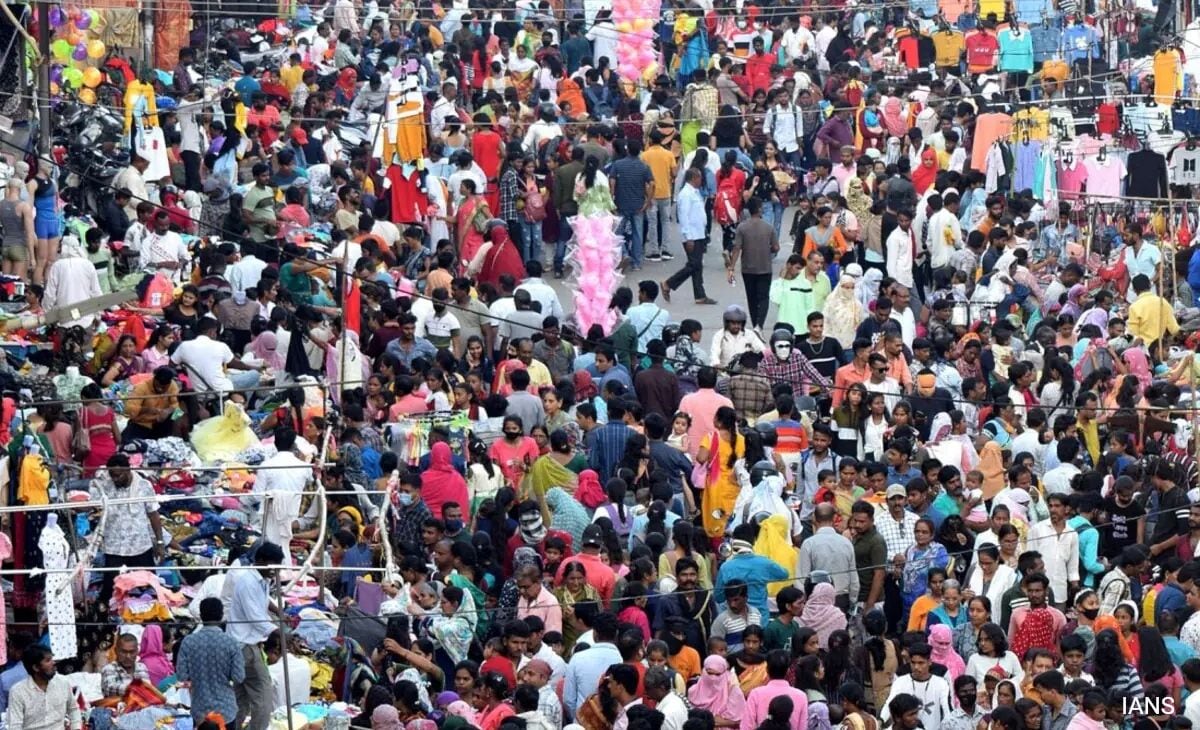
NEW DELHI — India's population is projected to stabilize by 2080, peaking at 1.8 to 1.9 billion people, as the country's total fertility rate (TFR) has fallen sharply below the replacement level, according to a new analysis by leading demographers . This represents a fundamental shift for the nation, which became the world's most populous in the early 2020s .
The Indian Association for the Study of Population (IASP) reports that India's TFR has dropped to 1.9, a steep decline from 3.5 in the year 2000 . This rate is below the replacement level of 2.1, meaning each generation is not producing enough children to replace itself, ultimately leading to a peak and subsequent stabilization of the population .
📉 A "Drastic" Demographic Transition
India is undergoing what experts call a "rapid demographic transition," with the birth rate dropping sharply over the past two decades . Anil Chandran, general secretary of the IASP, emphasized the scale of the change: "In 2000, our TFR was 3.5 and today it stands at 1.9. This is a drastic decline" . He stated that all estimates indicate India's maximum population "will remain below two billion" .
This slowdown is nationwide but uneven. The pace of decline has been faster in historically richer southern and western states compared to the central, northern, and eastern states . For instance, Kerala achieved replacement-level fertility between 1987 and 1989 and now has a TFR of around 1.5 . In contrast, states like Bihar still have a TFR of 2.8, the highest in the country, though this is down from previously higher levels .
🎓 The Drivers: Education, Empowerment, and Choice
Demographers attribute the falling fertility primarily to rising development and education levels, especially among women . "Increased female literacy has directly shaped decisions around marriage and childbearing, leading to smaller families," Chandran said . He noted a clear pattern: "Development is inversely proportional to birth rates. Illiterate groups still have fertility levels above three, but among the educated, TFR ranges between 1.5 and 1.8" .
This is supported by national data showing the TFR for illiterate women in India is 3.3, while for literate women it is 1.8 . Wider access to contraception and family planning services, along with delayed marriages and growing economic opportunities for women, have further accelerated the trend . "Couples today are better informed and exercise greater control over when and how many children to have," Chandran observed .
📊 Regional Disparities and Emerging Trends
The latest data reveals striking regional differences. According to the Sample Registration System (SRS) Statistical Report 2023, West Bengal's TFR has fallen to 1.3, down nearly 18% from 1.7 in 2013, placing it among the lowest in the country alongside Tamil Nadu and just above Delhi . West Bengal now records the lowest urban TFR and the second-lowest rural TFR nationally .
At the national level, the rural TFR has touched the replacement rate of 2.1 for the first time, while the urban TFR is significantly lower at 1.5 . The national crude birth rate (CBR) stands at 18.4 live births per 1,000 population, showing a continued decline . This decline in birth rates has already led to a shrinking child population. In the early 1960s, 40% of India was under age 14; by 2025, that figure was halved to 20% .
👵 The Other Side of the Transition: Aging and New Challenges
While fertility drops, life expectancy continues to rise due to improvements in healthcare . This combination is reshaping India's age profile, bringing new societal challenges. "More people are living beyond 60, and this brings new challenges of elderly care, especially as younger people migrate for work," Chandran said, adding that solutions like elderly day-care facilities are increasingly being discussed .
The demographic window of opportunity—a period with a large share of working-age population—is closing for India. The share of Indians aged 15-64 is projected to peak in the next two to three years . Subsequently, the dependency ratio (the ratio of children and elderly to the working-age population) will begin to rise again, driven by a growing elderly population . States like Kerala, with a longer history of low fertility, already have the highest proportion of elderly persons at 15.1% .
🔮 Future Implications and Policy Considerations
The population projections suggest India's growth will slow comprehensively. The country's annual population growth has fallen below 1% and is expected to fall below the world's average growth rate soon . India is expected to stop adding new people annually by 2060, with the population peaking in the early 2060s at around 1.7 billion before the later stabilization at 1.8-1.9 billion by 2080 .
This demographic shift presents a complex policy landscape. Experts suggest the need for a differential approach: high-fertility states still require investment in female education and health services, while low-fertility states must plan for aging populations, including sustainable pension systems and elderly care . Furthermore, environmental and lifestyle factors like air pollution, extreme heat, and chronic stress are increasingly recognized as contributors to reproductive health challenges, indicating that the reasons behind fertility decline extend beyond conscious family planning .
The IASP, comprising about 1,100 demographers, continues to study these shifts with support from international bodies like the UNFPA . As India navigates this new demographic reality, the focus turns from curbing population growth to managing the economic and social implications of an aging society and ensuring balanced regional development.


