
TNGEA Stages Statewide Protest Urging Return to Old Pension Scheme
Employees across Tamil Nadu rally for restoration of the Old Pension Scheme as negotiations with the government remain stalled, intensifying pressure on policymakers ahead of the new fiscal planning cycle.
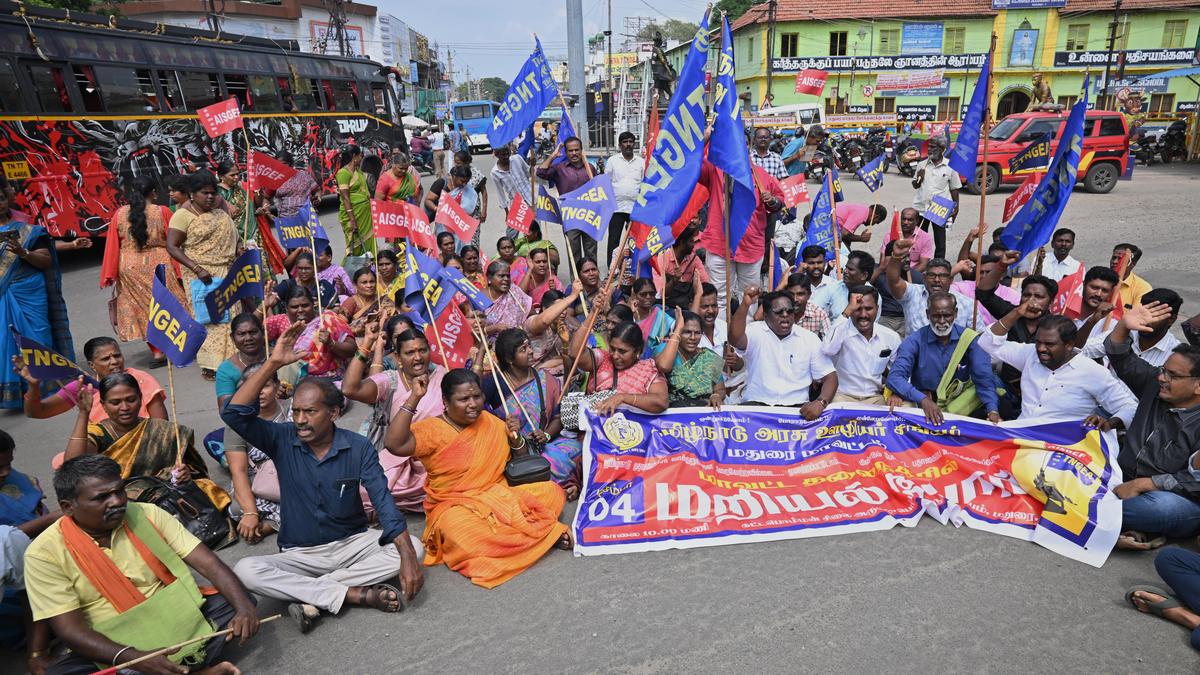
Thousands of Tamil Nadu government employees, led by the Tamil Nadu Government Employees Association (TNGEA), staged statewide protests on Wednesday demanding the revival of the Old Pension Scheme (OPS). Demonstrators gathered in district headquarters across the state, calling on the government to scrap the New Pension Scheme (NPS), which they say undermines financial security after retirement. The coordinated demonstrations mark one of the largest employee mobilizations this year as unions intensify pressure ahead of the 2025–26 budget cycle.
Protesters Call OPS a “Non-Negotiable Right”
Massive crowds assembled in Chennai, Madurai, Coimbatore, Trichy, and other major cities, holding placards that read “OPS is our right” and “Secure pensions for secure families.” TNGEA leaders said the shift from OPS to NPS has reduced post-retirement stability for lakhs of employees.
Association president M. Natarajan said the current pension system exposes employees to market fluctuations. “A pension is not an investment—it is a guarantee. The NPS shatters that guarantee,” he told reporters during the rally in Chennai.
Participants from various departments—including education, revenue, and transport—joined the demonstration. Many said they fear retiring without a predictable monthly pension.
⸻
Background: OPS vs. NPS Debate Intensifies
The Shift That Sparked Discontent
Tamil Nadu, like most states, adopted the New Pension Scheme in 2003 for employees who joined after April 1, 2004. Under OPS, retired employees received 50 percent of their last drawn salary and dearness allowance, fully funded by the government. The NPS, however, is a contributory, market-linked system that depends on returns from pension fund managers.
Employee unions argue that:
• The NPS does not guarantee a minimum pension amount.
• Pension payments are vulnerable to stock market volatility.
• Employees must contribute 10 percent of their salary, unlike OPS.
The government has maintained that NPS is fiscally sustainable in the long run, citing rising pension liabilities under OPS.
OPS Revival Gathers Support Nationwide
The push to restore OPS is gaining momentum across India. Rajasthan, Chhattisgarh, Jharkhand, Himachal Pradesh, and Punjab announced OPS reinstatements in recent years, though the Centre has not approved them under existing pension rules.
Union leaders say these states set a precedent. “If other states can bring back OPS, Tamil Nadu can too,” said S. Kannan, a senior TNGEA representative in Madurai.
⸻
Government Response and Fiscal Concerns
State Cites Financial Burden
Tamil Nadu officials say the return to OPS could significantly burden the exchequer. According to Finance Department estimates, pension expenditure already accounts for more than 10 percent of the state’s annual budget. Officials indicate that reverting to OPS could raise long-term liabilities substantially.
While the state government has offered to “examine concerns,” it has not announced a formal policy review. Finance Secretary R. Rajaraman told reporters last week that discussions with employee associations are ongoing. “The government understands the anxieties of employees but must balance financial sustainability,” he said.
Unions Reject Fiscal Argument
TNGEA leaders say the fiscal concern narrative is “misleading.” They argue that pension spending is manageable with proper planning, stronger revenue mobilization, and phased reforms in administrative expenditure.
“Employee pensions are not a burden—they are an obligation. The state must prioritize people over numbers,” said Natarajan.
⸻
Scenes From the Ground: Voices of the Protest
Teachers, Revenue Workers, and Health Staff Unite
Government school teachers formed one of the largest contingents at the protest. Many said they face uncertainty about their future income.
“I have served for 18 years. I still don’t know what I will receive after retirement,” said Geetha R., a government teacher from Tirunelveli.
Revenue department staff echoed similar concerns. “We work in demanding field conditions. We deserve retirement security,” said K. Murugan, a field-level employee in Salem.
Health department workers, who played critical roles during the pandemic, also joined the demonstrations. Many said their service should guarantee long-term welfare.
Protests Remain Peaceful but Determined
Police maintained presence at major rally points, but protests remained peaceful. Demonstrators shouted slogans, distributed pamphlets explaining their demands, and submitted representations to district collectors.
TNGEA leaders have warned of intensified action—including indefinite strikes—if the government does not announce a clear decision soon.
⸻
Political Reactions Across the Spectrum
Opposition Parties Voice Support
Opposition parties in Tamil Nadu expressed solidarity with the employees. Leaders from several political groups called the government’s delay “unjustified” and urged the immediate revival of OPS.
Some parties said the issue could influence upcoming elections. “Employees, teachers, and their families form a huge voter base. Ignoring their concerns is politically unwise,” said a senior opposition MLA speaking on condition of anonymity.
Ruling Party Maintains Cautious Stance
The ruling DMK has acknowledged concerns but has avoided direct commitments. Party sources suggest the leadership is studying legal and financial ramifications before announcing any policy move.
“The state cannot take unilateral decisions without considering central regulations, funding patterns, and long-term sustainability,” a senior official said.
⸻
National Pension Debate: What Comes Next
Central Government Holds Key Powers
Under current regulations, states must operate under the NPS framework approved by the central government. Any shift to OPS requires legal clarity and coordination with the Centre.
The Union Finance Ministry has repeatedly emphasized that NPS ensures “intergenerational equity,” avoiding the burden of pensions on future taxpayers.
TNGEA Plans Next Steps
TNGEA announced that it will hold statewide meetings over the next two weeks to gather feedback and mobilize further participation. Leaders said they may call for a joint strike with other employee unions if the state does not respond.
“We want dialogue, not confrontation. But we cannot wait indefinitely,” said Natarajan.
⸻
Growing Public Interest and Societal Impact
Retirement Security a Larger Social Issue
Economists say the OPS debate reflects a nationwide anxiety about retirement security. With rising inflation, unpredictable markets, and declining social support systems, employees increasingly seek guaranteed incomes.
“Public sector pensions are becoming part of a broader conversation about financial security in an uncertain economy,” said Dr. Meena Krishnan, a Chennai-based public policy researcher.
Potential Long-Term Implications
If Tamil Nadu reinstates OPS, analysts say more states may follow, intensifying pressure on the central government. Conversely, if the state rejects the demand, employee unions are expected to continue prolonged agitation.
For now, the protests mark a significant escalation in the ongoing pension reform debate in India’s public sector.
⸻
Outlook
With both sides holding firm positions, the next few months will be critical. The state’s decision could shape the future of pension systems not only in Tamil Nadu but across India. Employees say they will continue their struggle until they receive a concrete commitment.
“The fight will continue until our pensions are restored,” said Geetha, the teacher from Tirunelveli. “We owe it to


