
IOB Unveils New ATM Facility at Renovated City Bus Terminal to Boost Commuter Access
Freshly upgraded bus terminal gains enhanced banking convenience as Indian Overseas Bank installs a 24x7 ATM for thousands of daily passengers.
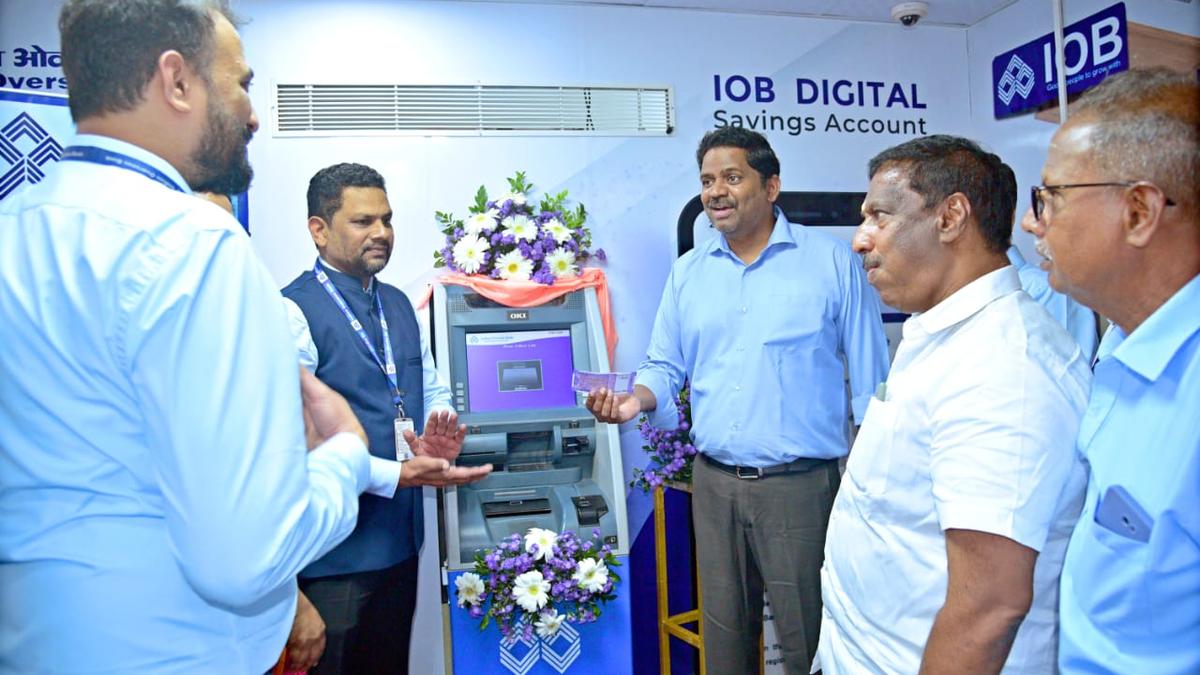
Indian Overseas Bank (IOB) inaugurates a new automated teller machine at the recently renovated central bus terminal on Wednesday, offering improved banking access for commuters, vendors, and local residents who rely heavily on the transit hub for daily travel. The installation, completed as part of the bank’s broader service expansion strategy, aims to meet rising demand for reliable cash withdrawal and basic banking facilities at the high-traffic public facility, officials say.
⸻
A Strategic Move to Improve Public Convenience
The IOB ATM becomes one of the first financial service points to open after the bus terminal’s renovation. With the terminal handling several thousand passengers daily, officials say the ATM is expected to ease access to essential banking services, particularly for workers, students, and outstation travelers.
An IOB regional officer says the bank views public-utility areas as a priority for service expansion. “Transport hubs experience heavy footfall and serve diverse communities. Placing ATMs in such locations ensures fast, convenient access to banking for people who may not have time to visit branches,” the official says.
Passengers welcome the addition, noting that ATMs near major transport points reduce last-minute inconvenience. “Earlier we had to walk to the nearest market for cash. This is much easier,” says a commuter who uses the terminal daily.
⸻
Renovated Terminal Reopens With Better Facilities
The bus terminal, recently reopened after a months-long renovation project, features expanded waiting areas, new seating, upgraded lighting, and improved sanitation facilities. Transport authorities say the modernization aims to create a safer and more comfortable environment for passengers while strengthening the city’s public-transport infrastructure.
Officials note that the absence of ATMs was a common complaint during the terminal’s earlier operations. The new installation, they say, directly responds to feedback from passengers and local businesses.
The terminal’s renovation includes new commercial kiosks, surveillance systems, and wider platforms designed to streamline bus movement. Authorities describe the ATM addition as part of the facility’s “last-mile convenience upgrades.”
⸻
Banking Access at Transit Hubs: A Growing Priority
Banks across India increasingly place ATMs in public-transport centers such as metro stations, railway hubs, and large bus terminals. According to industry data, ATMs located in transit points record some of the highest usage volumes, particularly during morning and evening peak travel hours.
Experts say the strategy helps banks maintain strong transaction numbers despite digital payment growth. “Even with UPI and mobile banking, cash remains essential for many day-to-day needs. Transit hubs are perfect locations for ATMs because commuters often require quick access to cash,” says an independent banking analyst in Chennai.
IOB’s initiative aligns with a broader trend of banks strengthening their presence in high-mobility urban zones.
⸻
Ensuring Safety and Convenience
The new IOB ATM is equipped with surveillance cameras and a security alarm system. Terminal authorities confirm that CCTV monitoring covers the ATM area as part of the renovated facility’s upgraded security network.
Passengers say the location, near the main entrance, feels safer compared to isolated kiosks in nearby streets. “It’s brightly lit and always crowded here, so people feel comfortable using the machine even during late hours,” says a vendor operating a tea stall nearby.
Officials say the ATM will also reduce congestion and crowding at nearby bank branches during salary and festival seasons.
⸻
Support for Local Vendors and Small Businesses
Small traders, ticket agents, and food stall operators working inside and around the terminal say the ATM installation makes daily transactions smoother. Many rely on cash for procurement, inventory purchases, and change distribution.
“Customers often need cash for quick snacks or small purchases. Having an ATM right here benefits both them and us,” says a shopkeeper inside the terminal complex.
According to market surveys, cash continues to dominate small-value purchases in low-ticket retail categories, especially in suburban and semi-urban transport hubs.
⸻
Digital Banking vs. Cash Needs: Balancing Both Worlds
IOB officials say the bank continues to push digital adoption while ensuring cash-based services remain accessible. “This is not about replacing digital banking but complementing it,” a senior manager says. “For many passengers, especially older citizens, farmers, and migrant workers, ATMs remain essential.”
The bank plans to install additional ATMs in similar public spaces in the coming year. Officials say the emphasis is on locations where daily mobility is high and cash requirements remain steady.
⸻
Community Response and Expectations
Local residents say the ATM meets a long-standing need and helps integrate the renovated terminal more effectively into the city’s daily life. Some urge for additional services, including deposit machines and mobile-banking assistance kiosks.
A commuter who uses the terminal to travel between the city and neighboring districts says the development is helpful but suggests that banks should consider installing backup power systems to avoid downtime during outages. “ATMs are most useful when they work consistently. If they go offline during peak hours, it defeats the purpose,” she says.
⸻
Future Plans and Operational Outlook
IOB says it will monitor the ATM’s usage patterns over the next three months. High transaction volumes may lead to additional kiosks or expansion of services at the terminal.
City transport authorities also plan to introduce more amenities at the renovated terminal, including digital timetable boards, mobile-charging stations, and designated help desks for intercity travelers.
The collaboration between the public-transport department and IOB is expected to continue, with both sides expressing interest in making the terminal a model for commuter convenience.
⸻
Conclusion: A Small but Significant Upgrade
The opening of the IOB ATM marks a practical step toward improving transit-related convenience at the newly renovated bus terminal. With thousands of passengers using the facility each day, the added banking access simplifies travel routines and strengthens the link between essential services and public infrastructure.
As the city continues upgrading key transport points, the inclusion of easily accessible financial services is likely to become a core component of commuter-centric planning.


