
Delhi Air Quality Deteriorates, Temperature Dips Amid Return of Winter Fog and Smoke
The capital's AQI nears the 'very poor' category after a brief respite, while the city records its coldest November in five years and a historic eight-year low in pollution levels for the year.
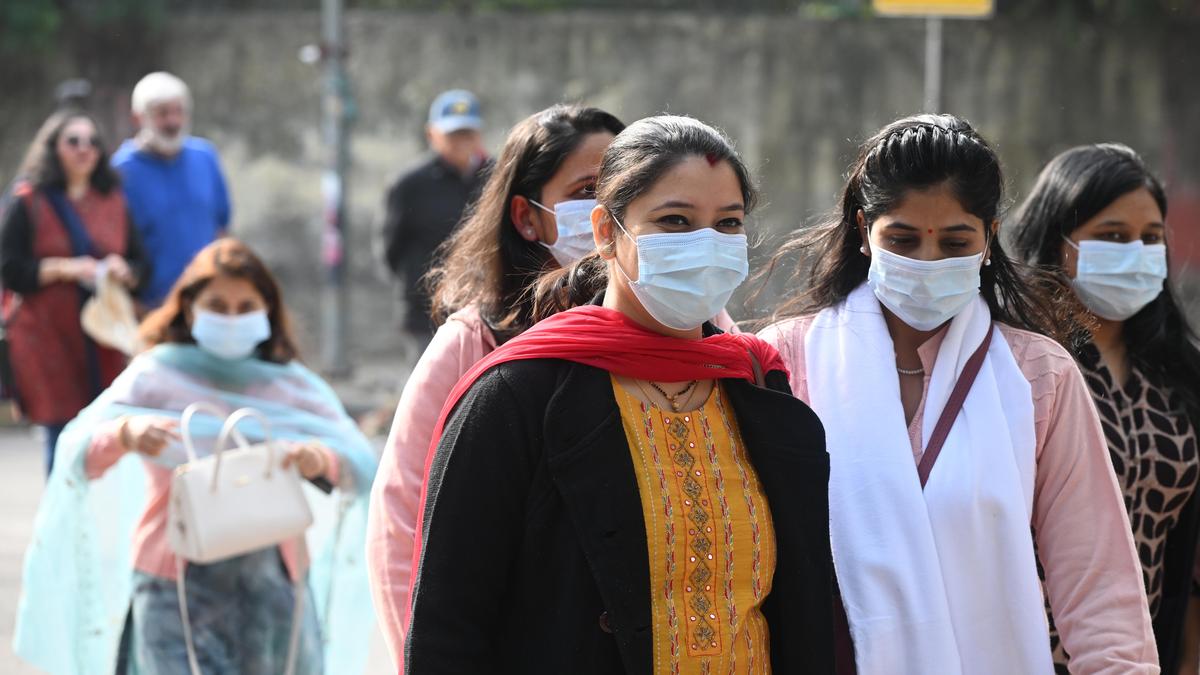
NEW DELHI — A layer of fog and smoke settled over India's capital on Monday, pushing air quality back toward "very poor" levels and marking a sharp end to a short-lived improvement, even as official data reveals the city's best long-term air quality trend in eight years . The Central Pollution Control Board reported an overall Air Quality Index (AQI) of 298 at 7 a.m., perilously close to the 301 threshold for "very poor," while the India Meteorological Department recorded a morning minimum temperature of 8.3 degrees Celsius (46.9 degrees Fahrenheit), two degrees below the seasonal average .
A Short-Lived Respite Vanishes
The deterioration follows a brief period of cleaner air on Sunday, when strong winds pushed the city's overall AQI down to 279, offering the first break from over two weeks of "very poor" to near-"severe" conditions . That Sunday reading was the second-lowest for the month of November, following a value of 202 on Nov. 5 . However, the relief proved temporary. By Monday, data from the CPCB's Sameer app showed at least 22 of the city’s 39 monitoring stations already recording air quality in the "very poor" category .
Localized hotspots showed even more severe pollution. Nehru Nagar in south Delhi recorded the highest pollution levels in the city with an AQI of 351, while several notorious hotspots like Anand Vihar (323), Bawana (337), and Jahangirpuri (319) remained firmly in the "very poor" range . In contrast, NSIT Dwarka reported the cleanest air in the city with a "moderate" AQI of 195, highlighting the extreme variability across different neighborhoods .
The Winter Chill Intensifies
Accompanying the dip in air quality is a significant drop in temperature, signaling the firm arrival of the winter season. The IMD reported that Monday's minimum temperature of 8.3 degrees Celsius (46.9°F) was two degrees below the seasonal norm, while the maximum temperature of 24.3 degrees Celsius (75.7°F) was also two degrees below average . This cooling trend is part of a broader pattern, as the city just experienced its coldest November in five years, with an average minimum temperature of 11.5 degrees Celsius (52.7°F) .
Weather forecasts predict the cold will persist. The IMD expects Monday's temperatures to hover around a maximum of 24 degrees Celsius (75.2°F) and a minimum of 8 degrees Celsius (46.4°F) . Experts attribute the dropping temperatures and fog formation to clearer skies and light winds, which allow for intense nighttime cooling . This meteorological combination is known to trap pollutants near the ground, creating the toxic haze that blankets the city each winter .
A Paradoxical Long-Term Improvement
Despite the immediate seasonal spike in pollution, official data released Sunday presents a more optimistic long-term picture. The Commission for Air Quality Management announced that Delhi recorded its lowest January-November average AQI since 2018, excluding the COVID-19 lockdown year of 2020 . The average AQI for the 11-month period in 2025 stood at 187, an improvement over 201 in 2024 and significantly better than 213 in 2018 .
Key pollutant concentrations also showed historic declines. The average PM2.5 level for the period up to Nov. 27 was 85 micrograms per cubic metre, the lowest since 2018 and on par with 2020 . Similarly, PM10 levels averaged 183 micrograms per cubic metre, also the lowest for the period since 2018, barring 2020 . Perhaps most strikingly, the capital experienced only three days where the AQI crossed into the "severe" category (above 400) between January and November, and not a single day exceeded the 450 mark . This compares favorably to 11 such "severe" days in 2024 and 16 in 2019 .
Political Controversy and Revised Measures
The positive annual data has not insulated authorities from criticism. On Friday, Aam Aadmi Party Delhi State President Saurabh Bharadwaj alleged that Delhi’s pollution crisis has become a public health emergency due to manipulation of air quality data and a failure to enforce graded restrictions . He claimed the BJP-run Delhi government fabricated AQI figures and allowed construction to continue despite bans under the Graded Response Action Plan .
Concurrently, the CAQM has revised the GRAP guidelines. Measures previously listed under Stage IV for the "Severe" category will now be triggered under Stage III . This shift means state governments in the National Capital Region and the Delhi government will now decide whether public, municipal and private offices should operate at 50% capacity, with the rest working from home . The central government may also permit work-from-home for its employees under these revised rules .
Regional Picture and Contributing Factors
The pollution problem extends beyond Delhi's borders. In the National Capital Region on Monday, Noida was the most polluted city with a "very poor" AQI of 316 . Greater Noida (288) and Ghaziabad (291) stayed in the "poor" category, while Faridabad was the least polluted at 208, also "poor" . Previous data from the Indian Institute of Tropical Meteorology's Decision Support System has highlighted the significant contribution of transport emissions and regional sources to Delhi's pollution load .
The situation in Delhi presents a complex duality: acute, hazardous winter pollution set against a backdrop of meaningful, if incremental, annual improvement. The immediate forecast suggests the familiar winter pattern of fog, low temperatures, and stagnant air will keep AQI levels elevated in the "poor" to "very poor" range for the coming days . The effectiveness of the revised GRAP measures and enforcement of existing bans will be tested as the season progresses.
The significant drop in the annual average AQI and particulate matter levels indicates that long-term policy interventions—such as the expansion of natural gas infrastructure, stricter industrial and vehicular emission norms, and increased electric vehicle adoption—may be yielding results. However, the persistence of severe episodic pollution underscores that these gains remain fragile and are overwhelmed by seasonal agricultural burning, unfavorable meteorology, and local emissions. The challenge for authorities is to accelerate the annual positive trend while developing more robust systems to mitigate the inevitable winter crisis, ensuring that the capital's air is not just better on an annual spreadsheet, but safer for its residents to breathe every day.


