
India Examines Bangladesh's Plea for Hasina Extradition After Death Sentence
New Delhi weighs complex legal, diplomatic factors as Dhaka demands return of ousted leader convicted of crimes against humanity in student uprising crackdown.

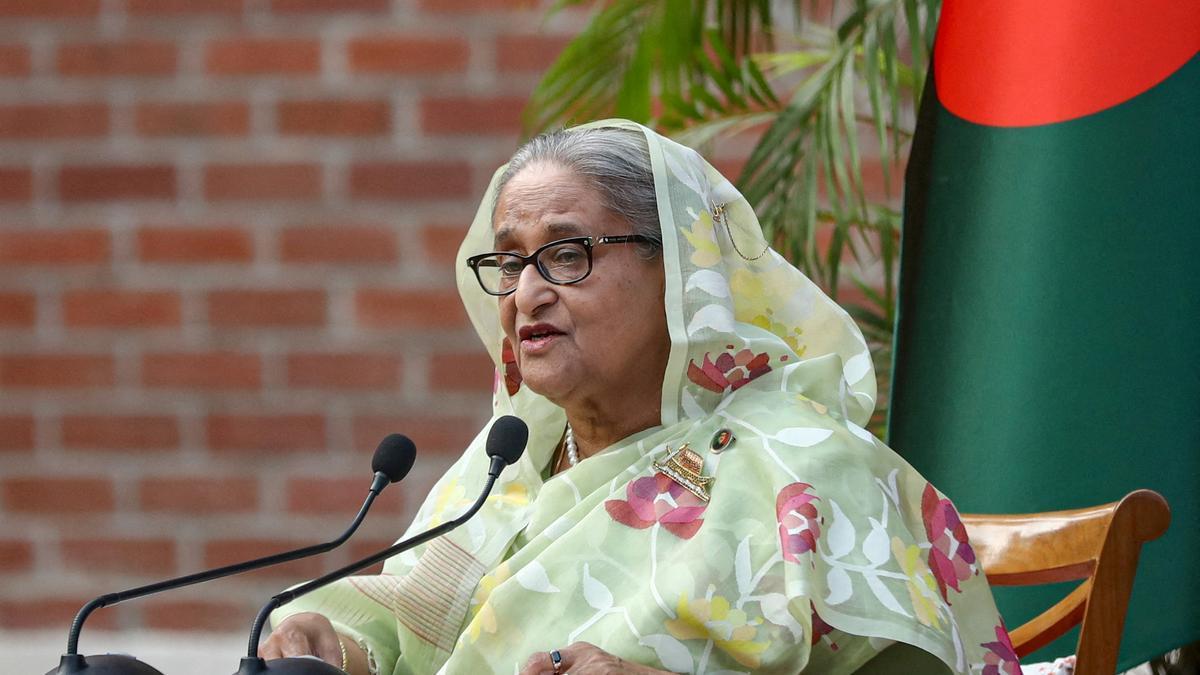
NEW DELHI — India says it is examining Bangladesh's formal request to extradite former Prime Minister Sheikh Hasina, who faces a death sentence for crimes against humanity, in a case that tests bilateral relations and raises profound questions about justice, sovereignty and regional stability.
Ministry of External Affairs spokesperson Randhir Jaiswal told reporters Wednesday that his government was examining the request from Dhaka for the extradition of the 78-year-old, who fled to India after being ousted in a mass uprising in August last year. The measured response signals New Delhi's cautious approach to a politically explosive issue that could reshape South Asian geopolitics.
Death Sentence Triggers Diplomatic Crisis
Bangladesh's government said Sunday it had asked India to extradite ousted prime minister Sheikh Hasina, who was sentenced earlier this week to be hanged over a deadly crackdown against a student-led uprising. The November 17 verdict by Bangladesh's International Crimes Tribunal convicted Hasina as the "mastermind and principal architect" of violence that killed an estimated 1,400 people during protests in July and August 2024.
Touhid Hossain, who holds the foreign affairs portfolio in Bangladesh's interim administration, on Sunday said Dhaka had sent a letter two days ago, urging New Delhi to hand over the fugitive ex-leader. The communication represents at least the third formal extradition request since Hasina fled Bangladesh, according to local reports.
Following the court ruling on Monday, the foreign ministry in Dhaka said in a statement that Delhi had an "obligatory responsibility" under a bilateral treaty to facilitate the former leader's return. Bangladesh characterized sheltering Hasina as "a grave act of unfriendly behaviour" and called it "a travesty of justice for any other country to grant asylum to these individuals convicted of crimes against humanity."
Legal Framework and Treaty Provisions
The 2013 India-Bangladesh Extradition Treaty provides the legal framework for Dhaka's request, but it also contains significant exceptions that give New Delhi substantial discretionary authority. As per Article 6 of the treaty signed in 2013, "extradition may be refused if the offence of which it is requested is an offence of a political character".
Article 1 and Article 2 of the treaty address dual criminality, meaning the alleged offence must be punishable under the domestic laws of both countries. India interprets "crime against humanity" charges differently, primarily in the context of international tribunals rather than domestic political events, providing potential grounds to argue the charged offence doesn't fit its legal definitions.
The treaty excludes certain serious crimes from political offense classification. Murder, manslaughter or culpable homicide do not constitute political character under treaty provisions. However, India retains broad discretion under Article 8, which allows refusal if accusations weren't made "in good faith in the interests of justice."
Former Indian High Commissioner to Bangladesh Pinak Ranjan Chakravarty says the legal grounds are far from clear and India is under no immediate obligation to hand over the ousted Bangladeshi leader. He explained that extradition is a legal process requiring formal court filings, which Bangladesh must initiate through proper judicial channels.
India's Diplomatic Calculus
Jaiswal said New Delhi would "continue to engage constructively in this regard with all stakeholders" as part of ongoing judicial and internal legal processes, remaining committed to the best interests of the people of Bangladesh, including peace, democracy, inclusion and stability. The carefully worded statement emphasizes India's concern for Bangladesh's broader welfare without committing to specific action on Hasina.
Anil Trigunayat, an Indian diplomat who has served in Bangladesh, said he "doubts very much" that New Delhi will send Hasina home to face prison or death. The former leader has rejected allegations against her as a political witch hunt, allowing India to potentially argue charges were politically motivated.
Sanjay Bhardwaj, professor of South Asian Studies at New Delhi's Jawaharlal Nehru University, said India understands Hasina's case to be political vindictiveness of the ruling political forces in Bangladesh. This interpretation provides diplomatic cover for refusing extradition while avoiding direct confrontation with Dhaka.
Political parties across the board in India are opposed to Hasina's extradition due to India's decades-old close ties with the Awami League and Hasina's family. India supported Bangladesh's 1971 Liberation War led by Hasina's father, Sheikh Mujibur Rahman, and provided shelter to Hasina for six years after Mujib's 1975 assassination.
Historical Context and Strategic Relationships
Hasina, 78, has been in hiding in India — her close ally when she was the prime minister of Bangladesh for 15 years, until her autocratic rule was overthrown in a mass uprising in August 2024, in which more than 1,400 people were killed, according to the United Nations. Her sudden departure from Dhaka followed weeks of escalating protests that began as student demonstrations against government job quotas before expanding into broader demands for political change.
The violence during July and August 2024 represented one of the deadliest periods in Bangladesh's recent history. Security forces deployed live ammunition, helicopters and surveillance drones against protesters, according to tribunal findings. The crackdown fueled public outrage and ultimately forced Hasina to flee on August 5, landing in India where she has remained at an undisclosed location.
Just as important as India's emotional connection with Hasina and the Awami League is the solid political, diplomatic, economic and security relationship that was built between the two sides during Hasina's rule. New Delhi benefited from Hasina's cooperation on counterterrorism, border security and regional connectivity projects that served Indian strategic interests.
Tribunal Verdict and Legal Questions
On Monday, a special International Crimes Tribunal in Dhaka convicted Hasina of crimes against humanity and sentenced her to death, fulfilling a key pledge by the interim government, led by Nobel Peace laureate Muhammad Yunus. Former Home Minister Asaduzzaman Khan Kamal also received a death sentence, while former police chief Chowdhury Abdullah Al-Mamun received five years after testifying as a state witness.
The tribunal's legitimacy faces international scrutiny. Critics note that Hasina was tried in absentia without opportunity to present defense, raising procedural concerns about due process. India's extradition law, as well as its extradition treaty with Bangladesh, contains a "political offense" exception, designed for situations like this, allowing a state to refuse extradition if the crime is political in nature.
International legal experts question whether trials in absentia for capital offenses meet global standards for fair proceedings. India's constitutional protections, particularly Article 21 guaranteeing life and personal liberty except through established legal procedures, could factor into deliberations about surrendering someone to face execution.
Bangladesh's Political Transition
Bangladesh is due in February to hold its first general election since the uprising, and Hasina's party, the Awami League, is barred from participating. The interim government led by Yunus faces the delicate task of organizing credible elections while managing calls for accountability and navigating complex relationships with neighbors.
Chakravarty said that for any upcoming election to be credible, the Awami League must be allowed to participate, noting you cannot have a free and fair election or an inclusive election in Bangladesh by banning the largest party. The exclusion of Awami League raises questions about the democratic legitimacy of February's polls and Bangladesh's political future.
Smruti S. Pattanaik, research fellow at the New Delhi-based Manohar Parrikar Institute for Defense Studies and Analysis observed that Bangladesh's interim government "is a transitional government with a limited agenda and mandate" and India would wait till an elected government is in place to take up substantial bilateral issues.
Deteriorating Bilateral Relations
India's past support for Hasina has frayed relations between the two neighbours since her overthrow. The interim government's anti-India rhetoric and concerns about minority protection have created additional friction. Reports of attacks on Hindu communities and temples in Bangladesh following Hasina's ouster have alarmed New Delhi and influenced domestic political opinion in India.
But tensions appear to have eased slightly this week after Bangladesh's National Security Adviser Khalilur Rahman visited India for a regional security summit, where he also met his Indian counterpart. The meeting at the Colombo Security Conclave suggests both sides recognize the need for functional diplomatic channels despite disagreements.
Reports indicate Rahman invited India's National Security Adviser Ajit Doval to visit Dhaka, signaling potential diplomatic repair efforts. However, the extradition issue remains a fundamental obstacle to normalizing relations, with each government facing domestic pressures that complicate compromise.
Strategic and Economic Considerations
Bangladesh represents India's largest trade partner in South Asia, with bilateral trade reaching $15.9 billion in fiscal year 2022-23. The two countries share a 4,096-kilometer border, the fifth-longest land boundary India maintains. Economic interdependence, river water sharing agreements, energy cooperation and connectivity projects all depend on stable bilateral relations.
India has substantial investments in Bangladesh's infrastructure, energy and telecommunications sectors. Indian companies view Bangladesh as a key market in South Asia's growth story. Conversely, Bangladesh depends on India for river water flows, electricity imports, transit facilities and market access for its products.
Security cooperation between the two nations has addressed insurgency threats along their shared border region. Hasina's government assisted India in neutralizing militant groups operating from Bangladeshi territory, a cooperation that could face uncertainty under new leadership in Dhaka.
International Law and Human Rights
The case raises complex questions about international obligations and human rights protections. While Bangladesh cites treaty obligations, India must balance those commitments against concerns about capital punishment, trial fairness and political persecution.
India, though not party to the 1951 Refugee Convention, generally respects the principle of non-refoulement — not returning individuals to places where they face serious harm. As signatory to the International Covenant on Civil and Political Rights, India considers these protections part of customary international law.
The death sentence itself creates complications. India has moved toward de facto abolition of capital punishment, executing only in "rarest of rare" cases. Extraditing someone to certain execution could face judicial challenges within India's legal system, particularly given procedural questions about the trial process.
Domestic Politics in Both Nations
In Bangladesh, political scientist Mubashar Hasan said Hasina "had to flee the country to flee the rage of the people" and now faces the extraordinary situation of hiding in India while handed a death penalty. Public sentiment demands accountability for the crackdown deaths, making the extradition issue politically sensitive for Yunus's interim administration.
Protests erupted across Dhaka and other Bangladeshi cities following the tribunal verdict, with demonstrators demanding Hasina's return and execution. The interim government faces pressure to deliver justice to families of those killed during the uprising, making compromise on extradition politically difficult.
In India, domestic politics also constrain options. The Bharatiya Janata Party government faces criticism if seen as abandoning a longtime ally who served Indian strategic interests. Opposition parties would exploit any decision perceived as weak or unprincipled, while human rights advocates oppose facilitating execution.
Procedural and Timeline Questions
Foreign Affairs Adviser Md Touhid Hossain said Bangladesh expects an answer from India on its latest request seeking the extradition of convicted disposed Prime Minister Sheikh Hasina, though a response is not anticipated within a week of the submission. The measured timeline suggests both sides recognize the complexity requiring careful deliberation.
Bangladesh said India is yet to respond over Dhaka's request and expects New Delhi to address the issue as the "situation is different now" with the judicial process completed and the former premier convicted. This formulation acknowledges that previous requests occurred before trial concluded, potentially changing the legal landscape.
Legal experts note that extradition proceedings, if formally initiated, could take months or years to resolve through Indian courts. The process would involve magistrate hearings, potential Supreme Court appeals and ultimately executive decisions by India's External Affairs Ministry, providing multiple stages for deliberation and legal challenges.
Regional Security Implications
The case resonates beyond bilateral relations, affecting broader regional dynamics. India remains committed to the best interests of the people of Bangladesh, including peace, democracy, inclusion and stability in that country, according to official statements emphasizing India's stake in Bangladesh's democratic trajectory.
China has increased engagement with Bangladesh's interim government, viewing the transition as opportunity to expand influence in South Asia. Pakistan has expressed sympathy for Bangladesh's political changes. The Hasina extradition issue could affect India's ability to maintain influence in Dhaka and shape regional security architecture.
The outcome may establish precedents for how South Asian nations handle political refugees and extradition requests involving former leaders. Similar situations could arise as the region experiences political transitions, making the legal and diplomatic handling of Hasina's case potentially consequential for future scenarios.
What's ahead?
The day Hasina was sentenced, Bangladesh's foreign ministry called on India to hand her over "without delay" and stated "This is India's responsibility in keeping with the existing bilateral extradition treaty between both countries". Despite this pressure, most observers expect India to delay or decline extradition while maintaining diplomatic engagement.
The Hindustan Times noted that during Indian Foreign Secretary Vikram Misri's visit to Dhaka last month, discussions focused on charting a constructive path forward in bilateral relations. An official statement emphasized India's "willingness to build a positive and constructive relationship" with Bangladesh, built on mutual trust and respect for each other's concerns.
The diplomatic dance continues as both governments navigate domestic pressures, legal obligations and strategic interests. India faces the delicate task of managing relations with Bangladesh's new leadership while honoring longstanding commitments to Hasina and the Awami League. Bangladesh must balance demands for justice against the need for functional relations with its largest neighbor.
Whether India ultimately extradites Hasina, refuses the request or seeks a negotiated alternative solution will significantly impact South Asian geopolitics and establish important precedents for how regional powers balance sovereignty, justice and strategic relationships in an era of political turbulence.
For now, New Delhi's cautious "examining the request" formulation buys time while both sides assess their options in a case where legal obligations, political pressures and strategic calculations intersect in profoundly complex ways.


