
Election Commission Extends Voter Roll Revision, Draws Criticism from Trinamool
The seven-day extension for the Special Summary Revision prompts opposition claims of a rushed process, while officials cite the need for thoroughness.
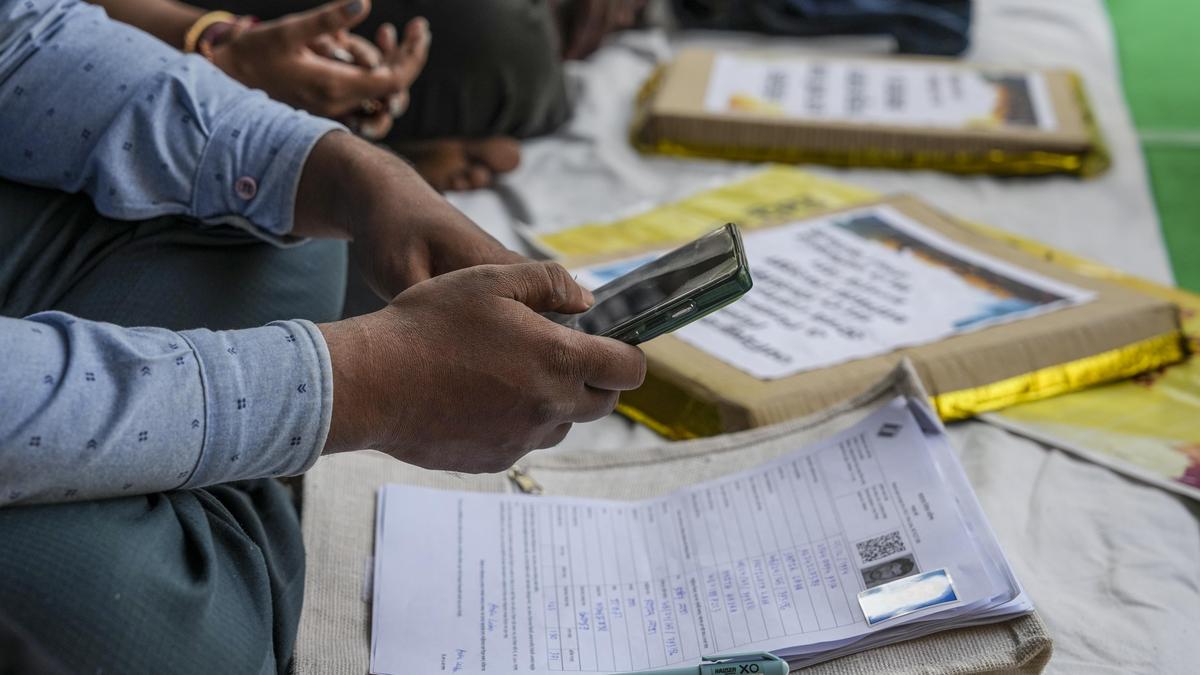
NEW DELHI, India — The Election Commission of India (ECI) announced a seven-day extension for its Special Summary Revision (SSR) of electoral rolls on Sunday, a move immediately criticized by the Trinamool Congress (TMC) as evidence of a "hurried" and flawed process. The draft electoral roll publication, initially scheduled for December 9, will now occur on December 16. The ECI stated the extension aims to ensure a more comprehensive and accurate revision, but the opposition party contends it reveals administrative unpreparedness.
The Announcement and Immediate Political Backlash
In an official communication, the ECI said the decision was made to provide Chief Electoral Officers (CEOs) and electoral registration officers across all states and union territories sufficient time to finalize the rolls meticulously. The commission emphasized that the extra week is intended to enhance the integrity of the voter list, a cornerstone of the democratic process.
The announcement drew a swift and sharp response from the Trinamool Congress. Party spokesperson Kunal Ghosh accused the commission of poor planning. "This last-minute extension proves that the entire revision process is hurried and poorly managed," Ghosh stated. "It creates unnecessary confusion and inconvenience for both citizens and our party workers on the ground. A process of this magnitude should have been planned with more foresight."
Understanding the Special Summary Revision
The Special Summary Revision is a routine but critical exercise conducted by the ECI before major elections to update the voter list. It allows for the inclusion of new eligible voters, the deletion of deceased or permanently relocated individuals, and the correction of errors in existing entries. The process involves extensive door-to-door surveys by booth-level officers and provides a designated period for public claims and objections.
The current SSR is particularly significant as it will form the electoral roll for upcoming state assembly elections and the next general election. Accurate rolls are vital for preventing electoral malpractices and ensuring every eligible citizen can exercise their franchise. The ECI has previously highlighted its goal of achieving "maximum inclusion" and "error-free" lists.
The Election Commission's Defense and Broader Context
In response to the criticism, a senior ECI official, speaking on condition of anonymity as they were not authorized to brief the media, defended the extension. "The decision was taken based on requests from the field to ensure no eligible voter is left out," the official said. "Our paramount objective is accuracy, not an arbitrary deadline. This flexibility demonstrates the commission's commitment to a robust electoral process, not a failure in planning."
The revision process occurs against a backdrop of persistent political debates over voter list integrity. Opposition parties have frequently raised concerns about duplicate entries and the inclusion of ineligible voters, while the ruling Bharatiya Janata Party (BJP) has consistently advocated for the linking of Aadhaar with voter IDs to clean up the rolls. The ECI maintains that its processes are impartial and designed to uphold the highest standards of electoral fairness.
Historical Precedents and Expert Analysis
Extensions in electoral roll revisions are not unprecedented. Similar adjustments have been made in the past to accommodate logistical challenges, natural disasters, or to ensure thoroughness in politically sensitive regions. Political analyst Dr. Smita Sharma notes that while extensions are administrative tools, they often become political footballs. "Any change in the election calendar is immediately viewed through a partisan lens," Sharma said. "The opposition will frame it as incompetence, while the governing party and the ECI will frame it as diligence. The true impact depends on whether the final roll is perceived as legitimate by all stakeholders."
Data from the last major SSR shows the scale of the task. The ECI processed over 50 million applications for new enrollments, deletions, and corrections across India. The commission has increasingly relied on technology, through portals like the National Voter Service Portal (NVSP) and the Voter Helpline app, to streamline applications. Despite this, ground-level verification remains a massive manual undertaking.
The Path Forward and Potential Implications
With the new deadline of December 16 for the draft publication, the subsequent schedule for claims, objections, and final publication will also be adjusted. All political parties are now tasked with re-calibrating their own internal exercises to verify the draft rolls and file objections within the revised timeframe.
The Trinamool Congress's criticism underscores the high-stakes nature of voter list preparation in Indian politics. A revised roll with significant errors or omissions could lead to legal challenges and fuel allegations of a compromised electoral process. The ECI's credibility rests on its ability to navigate these pressures and deliver a roll that is widely accepted as accurate and complete. The coming weeks will be a critical test of administrative efficiency and political trust in the lead-up to the next national electoral contest.


