
ED Serves ₹466 Crore Show-Cause Notice to Kerala Chief Minister in Masala Bond Probe
Pinarayi Vijayan, former finance minister Thomas Isaac, and a top official are accused of FEMA violations linked to KIIFB's overseas fundraising. The ruling CPI(M) calls it a political move.
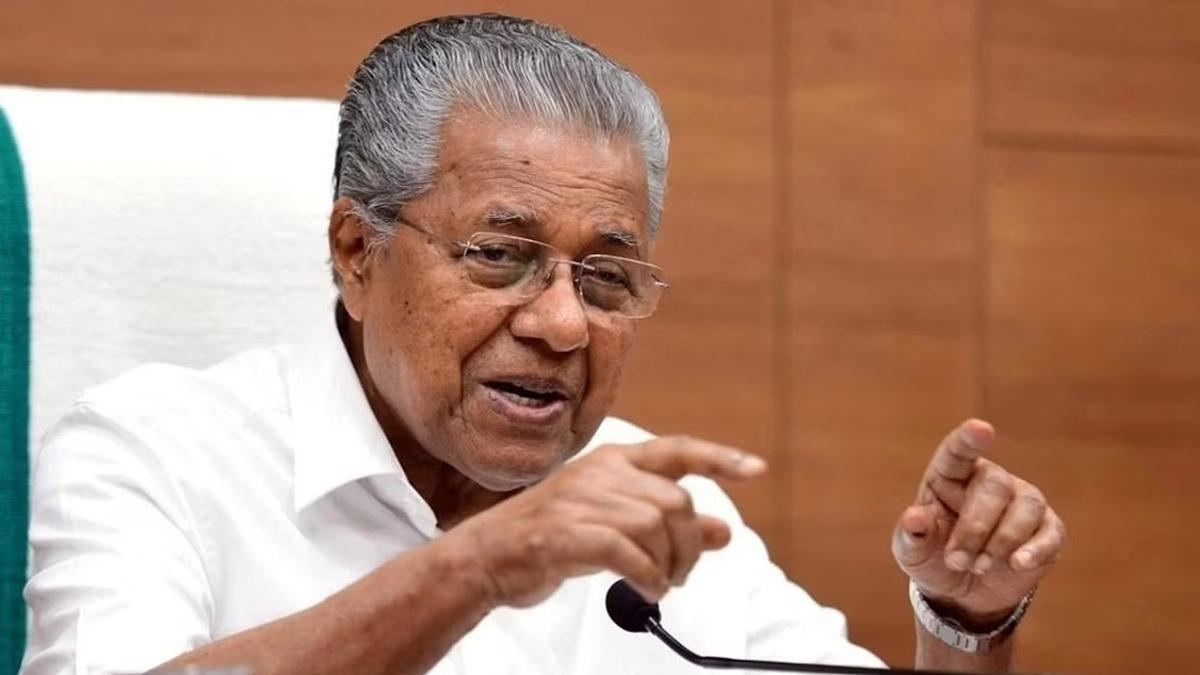
The Enforcement Directorate (ED) has issued a show-cause notice demanding ₹466 crore from Kerala Chief Minister Pinarayi Vijayan, former Finance Minister T.M. Thomas Isaac, and senior bureaucrat K.M. Abraham for alleged violations of foreign exchange laws in connection with a 2019 overseas bond issue by a state agency . The notices, issued under the Foreign Exchange Management Act (FEMA) about 10-12 days ago, mark a significant escalation in a three-year probe into the Kerala Infrastructure Investment Fund Board's (KIIFB) "masala bonds" and have ignited a major political controversy in the state .
The Notice and the Allegations
The federal financial probe agency issued the notices after concluding its investigation and filing a report before the Adjudicating Authority for FEMA in New Delhi . A show-cause notice under FEMA is issued at the end of an investigation, with the quantified contravention acting as a proposed penalty pending adjudication . The notice does not require the personal appearance of the recipients .
The probe centers on the end-use of approximately ₹2,150 crore raised by KIIFB through its debut masala bond issue, which was listed on the London Stock Exchange's International Securities Market in April 2019 . The ED's preliminary findings allege that funds raised through this external commercial borrowing were used for domestic infrastructure development and land acquisition, which the agency contends violates FEMA guidelines governing such overseas instruments . The agency has given the respondents 30 days to submit their explanations .
KIIFB and the Masala Bond Issue
KIIFB is the primary agency of the Kerala government for financing large-scale and critical infrastructure projects . The masala bond issue was a cornerstone of its ambitious plan to mobilize ₹50,000 crore for infrastructure development across the state . Masala bonds are rupee-denominated bonds issued overseas, and KIIFB's 2019 issuance was a landmark transaction for a sub-sovereign entity in India .
The decision to proceed with the bond issuance was finalized at a KIIFB board meeting chaired by Chief Minister Pinarayi Vijayan in January 2019 . The ED's investigation has scrutinized whether the raised funds, particularly around ₹2,000 crore, were utilized in strict compliance with external borrowing rules under FEMA .
Political Backlash and Defense
The ruling Communist Party of India (Marxist) has vehemently denounced the ED's action as politically motivated. Former Finance Minister Thomas Isaac, a key figure in the KIIFB initiative, stated that the notice was "politically motivated and a smokescreen," arguing that the timing coincides with the campaign period for local body elections in Kerala . He asserted that all procedures had necessary approvals from the Reserve Bank of India (RBI) and clarified that funds were used for land acquisition, not purchase, at a time when the RBI's restriction on land purchase using such funds was not in force .
CPI(M) state secretary M.V. Govindan echoed this, calling it "a political game," noting that ED actions have repeatedly surfaced around election cycles in the state since 2020 . Isaac accused the ED of acting as a "weapon" of the Bharatiya Janata Party (BJP) to obstruct Kerala's development and create a political sensation . He also revealed that he had previously approached the Kerala High Court to question the probe, which had temporarily restricted the ED from summoning him during the 2024 Lok Sabha elections .
Legal Context and Precedents
The legal tussle predates the notices. In July 2024, the ED informed the Kerala High Court that a detailed probe was necessary to determine if masala bond funds were misused, defending its jurisdiction under FEMA . KIIFB and Isaac had earlier petitioned the court, contending the state was being selectively targeted .
Legal experts suggest that immediate arrest proceedings are unlikely as the case is at the adjudication stage . The Adjudicating Authority will examine the ED's findings and hear arguments from all parties. If violations are proven, the authority can impose penalties of up to 300% of the amount involved . Any adverse decision can be challenged before the Appellate Tribunal .
Perspective
This high-profile case sits at the confluence of federal financial regulation, state autonomy in development financing, and heated political rivalry. The outcome of the adjudication process will have far-reaching implications, not only for the individuals involved but also for the operational framework of state-level agencies seeking international funding. It raises critical questions about the interpretation of FEMA norms for infrastructure financing and sets a precedent for how similar financial instruments used by other states might be scrutinized. The state government's defense hinges on procedural approvals from the RBI, setting the stage for a complex debate on regulatory compliance versus political oversight. As the respondents prepare their formal replies, the case is certain to remain a central issue in Kerala's political and developmental discourse.


