
Canada Fast-Tracks India Trade Deal Amid Trump Tariff Wars, Diplomatic Thaw
Ottawa pursues a Comprehensive Economic Partnership Agreement with the world's fifth-largest economy after a two-year diplomatic freeze over Sikh activist killing allegations.

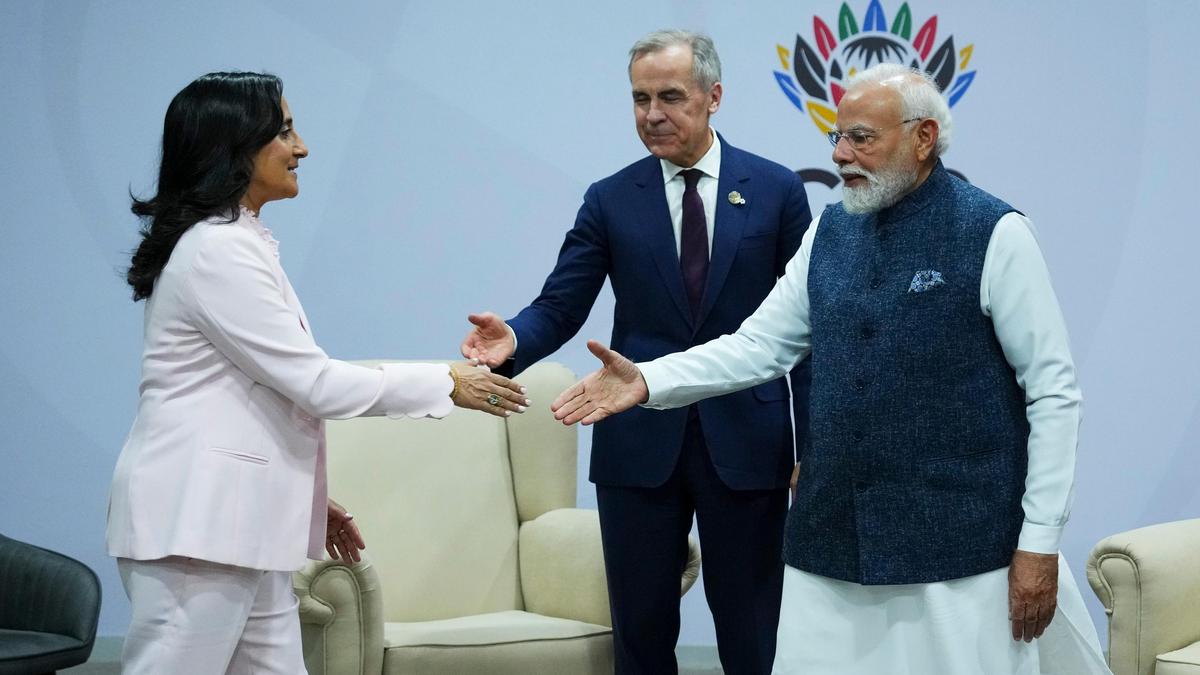
TORONTO — Canadian Foreign Minister Anita Anand announced Monday that Canada and India will move quickly to advance a trade deal after two years of strained relations, marking a dramatic shift in Ottawa's foreign policy as it seeks to reduce economic dependence on the United States under President Donald Trump's protectionist trade regime.
The announcement follows a meeting between Canadian Prime Minister Mark Carney and Indian Prime Minister Narendra Modi at the Group of 20 summit in South Africa this past weekend, where the leaders agreed to restart stalled talks for a new trade deal. The proposed Comprehensive Economic Partnership Agreement aims to more than double bilateral trade between the two nations by 2030.
New Foreign Policy Direction
Anand characterized the initiative as a completely new approach to foreign policy that responds to the global economic environment, emphasizing that protectionist trends worldwide have forced Canada to reassess its trade strategy. The minister noted that with a new government, prime minister, and shifting global order, Ottawa must adapt its position as a trading nation.
The timing reflects Canada's urgency to diversify beyond American markets. More than 75 percent of Canadian exports currently flow to the United States, making the country vulnerable to Trump's unpredictable tariff policies. Trade talks with Washington ended after Ontario's provincial government ran an anti-tariff advertisement that upset the president, following earlier tensions when Trump suggested Canada should become America's 51st state.
Economic Potential and Trade Goals
The Prime Minister's Office said the agreement would encompass goods, services, investment, agriculture and agri-food, digital trade, mobility, and sustainable development, with a goal to double two-way trade to $70 billion by 2030. However, some reports cite a target of $50 billion, reflecting different measurements and currency valuations.
Current trade between Canada and India remains modest compared to Canada's economic relationship with the United States. In 2024, Canada exported $5.3 billion worth of goods to India and imported $8 billion worth of goods, a fraction of the nearly $600 billion in goods shipped to American markets.
Anand noted that Canada is India's seventh-largest trade partner for goods and services, and one of the largest foreign investors in India. Canadian pension funds and institutional investors have substantial stakes in Indian infrastructure, positioning the country as a significant player in India's economic development.
Energy Sector Opportunities
Canadian officials see significant potential in energy exports. International Trade Minister Maninder Sidhu, who visited India earlier this month, highlighted opportunities to boost Canadian energy exports, particularly liquefied natural gas, noting India's economy grows 7 to 8 percent year-over-year and requires 70 percent more energy.
India's push to reduce coal dependence creates openings for Canadian conventional energy and nuclear technology. A uranium export deal worth approximately $2.8 billion over 10 years is reportedly in final negotiations, to be supplied by Canada's Cameco Corp.
Diplomatic Rapprochement After Crisis
The renewed trade discussions mark a remarkable turnaround from the diplomatic rupture that began in September 2023. Ottawa suspended trade talks after going public with allegations from the Royal Canadian Mounted Police that the Indian government was behind an assassination of Sikh activist Hardeep Singh Nijjar, who was shot in his vehicle outside a temple in Surrey, British Columbia.
The killing triggered one of the worst bilateral crises in modern Canada-India relations, leading to mutual expulsion of diplomats and suspension of all trade negotiations that had been underway since 2010. Four Indian nationals now face charges in connection with Nijjar's death, and the trial proceedings could test the fragile diplomatic reset.
Anand insisted that Canada's core values, including protecting democratic institutions against transnational repression, remain infused in its foreign policy. She emphasized that public safety, foreign interference concerns, and law enforcement cooperation continue alongside economic discussions.
Broader Strategic Pivot
Canada's outreach to India forms part of a wider strategy to strengthen ties with major Asian economies. Carney and Chinese President Xi Jinping took steps toward mending long-fractured ties between their countries at an Asia-Pacific summit last month, signaling Ottawa's determination to expand options beyond traditional Western partnerships.
Canada also struck a trilateral technology and innovation partnership with Australia and India, aimed at boosting cooperation in sectors like nuclear energy and artificial intelligence. The Australia-Canada-India Technology and Innovation Partnership represents a strategic alignment among three democracies concerned about supply chain resilience and technological sovereignty.
Timeline and Next Steps
Anand said both leaders were adamant that this work proceed as quickly as possible, noting the timing will be expeditious. The minister's comments suggest negotiations will advance on an accelerated schedule, though comprehensive trade agreements typically require years to finalize.
Carney will visit India in early 2026, providing an opportunity to cement progress and address remaining obstacles. The visit would mark a symbolic milestone in the relationship's recovery and offer a platform for announcing concrete agreements.
Carney's broader trade diversification strategy involves reducing dependence on the United States from its current dominant position. The prime minister has set an ambitious goal to double Canada's non-U.S. trade over the next decade, requiring successful agreements with multiple major economies.
Challenges Ahead
Despite the optimistic tone from both governments, significant hurdles remain. The Nijjar case continues through Canadian courts, and revelations from trial proceedings could strain relations. Canada's Sikh community, which numbers over 770,000 people, has expressed concerns about ongoing threats allegedly linked to Indian actors.
A politics professor at Toronto Metropolitan University described the speed of rapprochement as quite striking, given the severity of allegations just two years ago. The rapid shift reflects both countries' assessment that economic interests outweigh continuing the diplomatic standoff, particularly as global trade patterns fragment under Trump's policies.
India faces its own calculations. As the world's fifth-largest economy with aspirations to rank third, New Delhi seeks stable trade relationships and access to Canadian resources, technology, and investment. The country's massive infrastructure development plans require foreign capital and expertise that Canadian firms and pension funds can provide.


